Saturday, January 27, 2007

Slow Man

I have been wanting to note down a few things for myself, for the sake of my own memory--by saying this, what I mean is I don't want to bore you dear reader.

Call me a slow man if you will because I have been very slow in updating my blog--in fact, this is my first entry in the new year. Not just that, I did not even have time to read some of my favourite blogs. Life has been quite hectic in the new year. Most of it is related with work, and apart from work, all my time goes in attending to my daughter who demands, and rightly so, my company when I am home. The cat-loving Naipaul has famously said that every child born is a book killed. The equation, for me, is heavier on the side of the child.

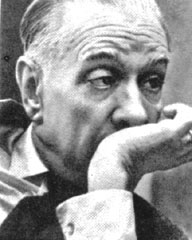
At work I am learning new things (Please don't get wrong ideas by the look of the accompanying image--it relates to the next para on a Tv show). It gives me some satisfaction, and sort of balances off what I am missing otherwise.

Once I come home from office, around midnight, I have my supper, which goes well with watching programmes on BBC, CNN or the Big Boss reality show on Sony TV (that's an Indian channel, and Big Boss is the Indian version of UK's Big Brother show). I have been following the show since day 1 and have seen people come and go. It could all be contrived but it shows you various dimensions of human emotions.

Last night I also saw Kaun Banega Crorepati, hosted by Shahrukh Khan who has replaced Mr Amitabh Bachchan. Much ink has been spilled over the rivalry between these two showbiz people but I guess Mr Bachchan bowed out because of ill health and there is no rivalry between them as far as KBC is concerned. Most of it is media fluff.

Not much happening on the reading front too. Enjoyed reading, quite slowly though, J M Coetzee's Slow Man. It is a beautifully told story of an Australian photographer who becomes an amputee after an accident and develops feelings for his European (immigrant) nurse. Everything goes on fine in the story, until Elizabeth Costello, a novelist, barges into the life of the amputee with the aim to use his life story as her next novel's material. The intrusion is at first irritating but then you learn to live with her, just as the hero of the novel does, and she keeps company until the very end, making the hero ponderous on various aspects of life (the human condition, Arjun?).

The novel has some interesting discussions on issues of immigration, old age, nostalgia, history and culture. At one point, the nurse's son steals a rare historical photograph of early Australian miners from the protagonist's collection (which has immense heritage value) and superimposes his father's face on one of the ancient miners: an act of giving one's family (a newly immigrant people) an old history or inventing a past in a new place to reclaim a non-existent ancestry, something that would justify the new immigrant's existence in the new land, among the natives. This is just the kind of novel I love.

Also finished the last few pages of Nirpal Singh Dhaliwal's Tourism. I had started reading it several months ago and could not endure Bhupi's unending chase for Sarupa after reading the first 8 or 9 chapters. Turns out that I was quite close to the climax, so thankfully I did not miss it. Bhupi not only gets to sleep with the sizzling Sarupa but also fathers her child. Well done Bhupi! I'd say the novel is not that bad as some critics judged it when it had come out--it fulfills its promise, fulfills the mission it sets out to achieve. Bhupi gets to mate Sarupa and that's it--mission accomplished! What more do you want from a novel like this? There are some interesting gems strewn around but I am not in a mood to quote them here.

Now I'm reading Kiran Desai's The Inheritance of Loss. The narrative's chunkiness may be an innovation but it posed a problem for me. So I'm reading it randomly from here and there--not a great way to read a novel. Whatever I have read so far is brilliant, and deserves every bit of the hype. It is straight from the gut, written with a feel from the ground.

On the cinema front, could catch a few good films. While Lage Raho Munnabhai did not appear as refreshing as its first part, I was bowled over by Blood Diamond and Apocalypto. While Blood Diamond was a fine piece of journalism meeting acting and action in Africa, Apocalypto took me to a different world, in the 16th century America. It makes a very clear point that makes immense sense to me: Fear is a disease and a community would perish if it allows fear enter its soul. This is, on the other hand, a great adventure film, sans the ILM kind of computer graphics. Good fun.

Meanwhile my friend and fellow blogger Deepika travelled to Sri Lanka to be a part of the Galle Lit Fest, and she has come back with some interesting stories and reflections, including a brilliant piece on Kiran Desai. Here is her report and here is the interview.

In India, another friend and fellow blogger Jai Arjun Singh travelled to Jaipur to hobnob with some celebrated Indian writers. Here are his insightful reports.

Friday, December 22, 2006

The XYZs of gender testing


She crossed the finishing line at Doha with distinction but failed in the battle of the sexes, figuratively speaking.
Twenty-five-year-old Santhi Soundarajan, an athlete from India, was stripped of the silver medal she won in the 800 metres women's finals at the 15th Doha Asian Games after failing a gender verification test. But what exactly does a gender test mean?
Gender testing is not as simple as lowering one's skirts. It is a complicated issue, which even the International Association of Athletics Federations (IAAF) regards as not "completely resolved". The International Amateur Athletic Federation, the previous avatar of the International Association of Athletics Federations, introduced gender-verification testing in 1966 to deter males from competing with females in sports.
According to the IAAF policy paper on gender verification, prepared by the IAAF Medical and Anti-doping Commission 2006, the first such test involved "crude" and "perhaps humiliating physical examinations".
This was followed by a method of determining "sex" chromatin through a buccal (oral) smear examination. But even this left too many uncertainties. For example, normally a woman has a pair of X chromosomes, and a man has an X and a Y chromosome, but there can be genetic abnormalities such as XO (known as the Turner's Syndrome), XXY (the Klinefelter's Syndrome) or XYY (the Supermale Syndrome).
Because of these uncertainties, the chromatin test was abandoned, first by IAAF in 1991 and, since the Sydney 2000 Games, by the International Olympic Committee (IOC). Ever since, says the IAAF position paper, "a search has continued for an acceptable and equitable solution" to determine the gender of a sportsperson when challenged by a competitor.
Meanwhile, both the IOC and IAAF are working on a "consensus document" as a guide to dealing with cases of gender verification.
The basic position is that this kind of test is not mandatory, but can be carried out if officials want it or a rival team protests. Such cases cannot be resolved through laboratory-based sex determination alone, and a team of doctors — including a gynaecologist, endocrinologist, psychologist, internal medicine specialist and expert on gender/transgender issues — should examine the athlete.
IAAF holds that if an athlete undergoes sex change operations and appropriate hormone replacement therapy before puberty, then the athlete is allowed to compete as a female. If such procedures are conducted after the onset of puberty, the athlete has to wait two years for an evaluation.
According to Ms Santhi's parents, the 25-year-old athlete has yet to reach puberty. So, will it affect her career if she opts for appropriate hormone therapy? Will she have to wait for two years and seek a review by an expert panel following surgery and hormone therapy? All this is not clear yet.
Ms Santhi's ordeal started on Dec 9 when a gender test was carried out soon after her win. According to CNN-IBN, she apparently failed the polymerase chain reaction test, which identifies the actual genetic make-up of a person.
Since Ms Santhi's test results have yet to be made public, it is not clear if her gender verification test was comprehensive, as advised by IOC and IAAF. The BBC reported: "It is not clear how she failed the test at the Asian Games in Doha."
Interestingly, Ms Santhi failed a gender verification test two years ago when she applied for a job at the Indian Railways. However, she cleared this test at the Asian track and field championship in South Korea last year, where she won the silver in the 800m.
Can a person's gender change? Could Ms Santhi be a "he" in 2004, "she" in the games last year, and "he" again in Doha? There is no conclusive answer for now.
This controversy has also brought into focus the role of the Athletics Federation of India, which selected Ms Santhi to compete at Doha despite knowing about her disqualification for the railways job.
Though the Indian Olympic Association has decided to hold an inquiry into the issue, there is a pressing need to demystify the gender test at all levels, and find a conclusive scientific solution to the entire process. Six years into the 21st century, it is unacceptable that sportspersons and countries should suffer from such "confusing", ex post facto embarrassments.
Published in Today

Thursday, December 21, 2006

Sam's Story


What is the nature of war? How does it affect your life even if it rages on and kills people hundreds of miles away from where you live? Can war’s futility be overemphasised?

Complex questions like these underpin the seemingly simple narrative of Elmo Jayawardena’s debut novel, Sam’s Story.

The novel’s comic façade and the charming simplicity of the text hide the dual core of anti-war and anti-racial prejudice messages that form the only turbulence in this smooth flight of imagination.

The novel is a first person account of a young, unlettered village boy, who is arbitrarily named Sam by Madam Martell of Colombo whom he served briefly as a houseboy. The story is set in the twilight years of the last century.

From a Sri Lankan village steeped in utter poverty, Sam comes to work in the River House, and comes to love both the house and its inhabitants.

He likes his friendly master, the Big Boss, who pilots an aerobblane, admires the lady of the house who is generous with food, and loves their two children, especially the boy, who come for vacations from their school in a far away place.

In the river house he is put to do what most poor people do in rich people’s houses: sweep the garden, water the flowerbeds and the lawn, wash the cars, open and close the gate when the cars come and go, feed the dogs and switch on and switch off the house and garden lights. This makes Sam an errand boy and gardener because there are others who do the other, more important jobs: Leandro, the cook, who is the ‘other kind’ and has a big room to himself and Janet, the housemaid, who is also from the ‘other kind’.

Who is this other kind? “The kind that made war, and killed soldiers and threw bombs at our leaders,” defines Sam.

“I didn’t like them,” says Sam upfront about Leandro and Janet. The boy, narrator of this tale, is generally naïve but he clearly knows what moves him and what irks him. “If I knew I had to work with their kind, I would not have come to the river house. But I was here; I couldn’t go back, nothing to go back to in the village.”

In an otherwise likeable set up, Sam has to put up with these two from the ‘other kind,’ his bete noir. They constantly remind him of the racial war their ‘kind’ was raging in the villages and killing the state’s soldiers. Their presence makes him a virtual pawn in the war and he feels to be under enemy fire all the time between Leandro, the vocal enemy, and Janet, the silent type enemy.

Sam didn’t like Leandro’s stupid war talk—“this Elam and tiger business”:

“It was about the war where his people were fighting my people and about cutting the country into two and such things. I didn’t know enough to talk back to him. Leandro knew everything. He knew who died and where the bombs exploded. He knew how many died and who shot whom and why? He even knew who was going to die. I mean which one among our leaders was going to be killed.”

As if that wasn’t chilling enough knowledge for Sam, he had to contend with more of Leandro’s patent exultation in violence against Sam’s people: “He would listen to the radio carefully and the come running to taunt me…Leandro would strut about his kitchen like a peacock and relate the news stories with pride, as if he himself had killed the hundred…Then he would run and tell Janet. It always ended with Leandro giving his chicken laugh.”

Despite his naivety, Sam understands the crux of the problem, the politics behind Leandro’s hatred for his ilk: “I think this war had split way beyond the leaders who were planning and the soldiers who were fighting. It had even made stupid cooks like Leandro hate stupid gardeners like me. It was a matter of what kind you belonged to—you always hated the other kind.”

Elmo has shown, through this kind of hatred among the man on the street, the level of rottenness in the country’s society.

Sam’s best friends in the river house are not humans. They are the two pet dogs of the family, Bhurus (actually Brutus) and Lena. And why are they his best friends? “Bhurus and Lena were my best friends. They didn’t throw bombs. They didn’t kill any people.”

Once Sam’s story is on the roll, the plot gets stalled in a way until the end, and the narrative in between becomes a collage, a mosaic of character studies seen through the eyes of Sammy boy.

Nevertheless, it is interesting, especially its myriad light moments held together by Sam’s bucolic humour. Otherwise, the narrative’s jet engines slow down. Those looking for a racy war novel here are in for a disappointment.

The cadence of the story is rhythmic and repetitive, echoing the rural storytelling tradition of the country. One wouldn’t expect an unlettered narrator to wax eloquent like the narrator of Arundhati Roy’s The God of Small Things, also a novel on divide in society (casteism in this case) and loss.

War is futile. Sam and Leandro realise this when the images of war’s violence cease to become mere images on the television screen. They get completely disillusioned with the hoopla of war. Leandro changes for good: “I don’t think Leandro wants to join the fighting any more. He was very sad. I don’t think he wants to have anything to do with the war after what happened to the river house.”

That is one of the most humanising moments in the novel—Sam and Leandro sharing the same pain, forgetting the divide of race and politics. Their loss becomes common now. It circumvents their divide, makes it pointless.

Sam’s Story also demonstrates the helplessness of the poor, and even the rich, who don’t choose to be party to conflicts and yet suffer its consequences.

Sam’s boss, who wanted no part of the war, pays the price for being at the wrong place in the wrong time. His innocence, his non-partisan attitude does no good to him. He used to say: “That war is purely political, to fulfil the empty ambitions of our leaders…It is a war for the rich to get more rich and for the poor to die.”

This cannot be truer than in the present time, and it holds water not just for the war in Sri Lanka but for all the wars that are ravaging our world today. And who would know it more intimately than an aeroplane pilot after 911 and the recent Heathrow bomb plot? That pilot is none other than Captain Elmo, the creator of Sam and his heart-touching story.

If you get a chance to pick up Sam’s Story, then please do. A smooth flight is assured. So, ladies and gentlemen, fasten your seatbelts and enjoy your flight.
-----------------------------------------------------

Sam’s Story, published by Vijitha Yapa Publications in Sri Lanka (1991) and Marshall Cavendish in Singapore, was awarded the prestigious Graetian Award in 2001 for the best literary work in English in Sri Lanka.

Captain Elmo Jayawardena writes novels when he is not flying jets for Singapore Airlines or working for his charitable foundation, AFLAC. For a detailed biography of Capt Elmo, please see this post by MediaCorp journalist Deepika Shetty.

I write because...


This year's literature Nobel Laureate Orhan Pamuk is a much admired writer. Honestly, I am yet to read most of his work. The only one I had tried so far in the early months of this year, without any idea of his forthcoming Nobel win, was My Name is Red. It is cited as one of Pamuk's best novels.


Over the years, whatever little reading I have done, I have realised that some works, even if they are much admired, don't work well in translation with readers like me. That's why while others enjoy works in translation, I often don't.


I tried reading My Name is Red (Benim Adım Kırmızı) but lost interest after page 50 or so. I give a book enough attention, time and effort until I am convinced it is not for me, at least for that particular time in my life. So I abandon it. I don't care what others think of me. I read for my own pleasure, and my instruction.


Will try again to read some of his other works in the coming months.


I liked one of the passages from his Nobel lecture:


As you know, the question we writers are asked most often, the favourite question, is; why do you write? I write because I have an innate need to write! I write because I can't do normal work like other people. I write because I want to read books like the ones I write. I write because I am angry at all of you, angry at everyone. I write because I love sitting in a room all day writing. I write because I can only partake in real life by changing it. I write because I want others, all of us, the whole world, to know what sort of life we lived, and continue to live, in Istanbul, in Turkey. I write because I love the smell of paper, pen, and ink. I write because I believe in literature, in the art of the novel, more than I believe in anything else. I write because it is a habit, a passion. I write because I am afraid of being forgotten. I write because I like the glory and interest that writing brings. I write to be alone. Perhaps I write because I hope to understand why I am so very, very angry at all of you, so very, very angry at everyone. I write because I like to be read. I write because once I have begun a novel, an essay, a page, I want to finish it. I write because everyone expects me to write. I write because I have a childish belief in the immortality of libraries, and in the way my books sit on the shelf. I write because it is exciting to turn all of life's beauties and riches into words. I write not to tell a story, but to compose a story. I write because I wish to escape from the foreboding that there is a place I must go but – just as in a dream – I can't quite get there. I write because I have never managed to be happy. I write to be happy.

I guess these lines echo the sentiments of most writers. If anyone asks you why do you write refer him/her to these lines of Pamuk.

Tuesday, December 19, 2006

How to move out of the line of fire


JULY 15, 2001 was a remarkable day in the history of India-Pakistan relations. Pakistan's President Parvez Musharraf was on his maiden visit to India. He was to meet India's then Prime Minister A V Vajpayee the next day in Agra and issue a joint statement which would mark a thaw in relations between the two estranged neighbours.

Delhi was steeped in a discernible excitement and the 24-hour TV news channels went into overdrive speculating on what was going to result from this summit.

The two leaders met in Agra but the "Agra Declaration" was never signed. General Musharraf abruptly left India. A historic moment passed without being grasped.

What followed was an "eyeball-to-eyeball confrontation" between India and Pakistan on the border in 2002. Notwithstanding Gen Musharraf's overtures for "peace" with India on numerous occasions later on, not much progress was made and, after 911, his focus switched to the war on terror with his friend, United States President George W Bush.

Now that the clouds of war are on the wane and he has written a self-congratulatory autobiography, In the Line of Fire, after beating Al Qaeda in Pakistan, Gen Musharraf has once again turned his attention to resolving the issue of Kashmir, a territory claimed by both India and Pakistan.

In an interview earlier this month with New Delhi Television (NDTV), he gave a "four-point solution" to solving the Kashmir dispute, which includes a phased withdrawal of troops and self-governance for locals.

The news made international headlines.Truth be told, there is hardly anything new in his purported "four-point solution".

Published in Today, Dec 18

Read the full text here.

Thursday, December 14, 2006

In search of international success?

Reading the interview with Yiyun Li in The Guardian made me think more about the regime in China and the flight of the Chinese students to the USA (strangely about Indian students to the USA too), and much less about literature and short story writing.

Though I am yet to sample any of her stories, I am sure she makes a great impact as a writer, going from the kind of awards she has got and the kind of strides she has made in the literary world (apart from the letters of recommendation she has got from the likes of Rushdie and the editor of The New Yorker). Her story comes off as a success story of an immigrant who has achieved recognition in her field. Instead of a writer, it could have been the case study of a person from any other profession: metallurgy, nuclear physics, hydraulics, genetic engineering.

So what has she made me think about China?

The point I am going to make will only make sense to you when you compare it with India's case. The big picture in this context is this: The Indians and the Chinese make the highest number of foreign students in the USA.

From her interview, and after reading many accounts and reports, it seems that the Chinese flock to the USA (or any other developed country) for higher studies more for reasons of escaping the authoritarian regime at home than for anything else. Of course, making it to the USA is anybody's dream from poorer and less freer societies. Of course, Getting rich is glorious, as the Maoist slogan goes. That inspiration is always there. So the dream of success is there but I guess those who make it to the USA to settle down there for good make a good number (majority) of Chinese migrants.

This is understandable in the case of the Chinese. But what about the Indians? India is a democracy, there is freedom, all sorts of facilities are there--IITs and IIMs and so many other good institutions for many many decades. The why do members of the Indian elite flock to the USA for settling down there? What repression/system failure are they escaping from? While many are returning now, the majority of them still want to remain in the land of the opportunity.

I am not saying that there is anything wrong here. I also suspect that many Indians would not buy this line of argument. But does it not strike you that the Indians, more than the Chinese, go to the US to get degrees and then settle down there? All my friends who went to the land of Uncle Sam have no intention of returning to India. Many have taken American citizenship and have married into the local community.

I never looked at these numbers, thousands of Indian and Chinese students, from two opposite socio-political system, immigrating to USA and other Western countries in search of suceess, in this light before.

We know what is lacking in China. But what about India? The Indian brain drain started a little after Independence. Since then, we might not have much else but we had plenty of freedom. So what caused the Indian brain drain? Nehru's socialism? But that was then. What accounts for this current outflow of students from a shining liberalised India?

And here is a relevant qrote. Arguing for allowing FDI in the education sector in India, economist Bibek Debroy writes (OPEN EDUCATION TO FDI TO REVERSE BRAIN DRAIN) in Tehelka: "First, with 1,20,000 Indian students going abroad annually, the annual foreign exchange outgo is $4 billion. If FDI entry leads to supply-side improvements, not only will this foreign exchange outflow be saved, there may even be some inflow, because students from elsewhere may come to India."

Clearly the problem is there. But for many Indians admitting even this, that there's this problem with the shining India, might be problematic.

Perhaps what is fuelling this exodus is the pursuit of success. Now homegrown success is not enough. International success is the authentic success. This perhaps cannot be more true in a globalized world. Getting success with an international label--a Penguin, a Random House, a Columbia Pictures, a Luis Vuitton-- is being more successful, being more recognizable than getting success with any of the big label's local variants, or much worse, with local brands. Everybody wants to be on the big billboard, beating the 'mini successful' crowd back home at the game of Warholean fifteen seconds of fame.

Is this the whole truth or there is something else behind the dream of super-size-me success and a Staffordean wives' lifestyle?

David Foster Wallace on Borges

Ever wondered what makes Borges' stories Borgesian?

I love Borgesian tales and that's why when I came across this review of Borges' biography in the NYT recently by David Foster Wallace, I loved to make a note of it. Here I am sharing it with you:

"This is because Borges the writer is, fundamentally, a reader. The dense, obscure allusiveness of his fiction is not a tic, or even really a style; and it is no accident that his best stories are often fake essays, or reviews of fictitious books, or have texts at their plots' centers, or have as protagonists Homer or Dante or Averroes. Whether for seminal artistic reasons or neurotic personal ones or both, Borges collapses reader and writer into a new kind of aesthetic agent, one who makes stories out of stories, one for whom reading is essentially -- consciously -- a creative act. This is not, however, because Borges is a metafictionist or a cleverly disguised critic. It is because he knows that there's finally no difference -- that murderer and victim, detective and fugitive, performer and audience are the same. Obviously, this has postmodern implications (hence the pontine claim above), but Borges's is really a mystical insight, and a profound one. It's also frightening, since the line between monism and solipsism is thin and porous, more to do with spirit than with mind per se. And, as an artistic program, this kind of collapse/transcendence of individual identity is also paradoxical, requiring a grotesque self-obsession combined with an almost total effacement of self and personality. Tics and obsessions aside, what makes a Borges story Borgesian is the odd, ineluctable sense you get that no one and everyone did it."

Tuesday, December 12, 2006

The General and his labyrinth

I am not very fond of political biographies. Most of my spare time goes to reading fiction or literary non-fiction. But I could scarcely believe my indulgence when I started reading General Parvez Musharraf’s autobiography, In The Line of Fire.


Despite its heavyweight theme, clichés and superfluity, it is written like a racy thriller. It starts with a violent beginning, a suicide attack on the President of Pakistan, and then like a flashback, portrays the journey of the man who was the target of the suicide attack.

At that time, when I started reading this book, I was between a novel and a political science book but the General’s opus wrested my attention so much that I had to keep everything aside. Even the eagerly awaited Bond flick Casino Royale had to wait for a week.

Every night I found myself delving deep into the world of this Delhi-born little Muslim boy who had migrated to Pakistan with his parents at the time of the sub-continent’s partition, who spent part of his childhood in Turkey, speaking a fluent Turkish like any other local Turkish boy of his age, was known as a dadageer (a bold, awe-inspiring person, more like a bully) amongst his peers, didn’t do as well in his studies as his bright elder brother and who ended up in the army. The boy turned into a soldier of promise who was destined to end the phase of “sham democracy” in Pakistan and save his country from the brink of disaster, from imploding as a failed state.

Too good to be true? But that's how the General has written his biography, which many have alluded to as "selective hagiography". At times, it looks like a justification palimpsest from this formidable ruler, who needs a crash course in humility; at others, it looks like his manifesto, especially the last few chapters of the book, on why Pakistan and the world needs him in the age of terror.

It makes sense, in a way. During the cold war, Pakistan was (still is) the ally state of USA in South Asia, a bulwark in the region. Now that China is emerging as the new super power, Pakistan is still useful as a bulwark state for China in an India-dominated region.

Hagiography or self-laudatory spiel, the book opens a window into the life of a military general, who once was in love with a Bengali girl, who rues over the unjust legacies from a painful partition, who broke down on the vivisection of Pakistan into Bangladesh and who vilifies India for her treacherous role in that separation.

Whatever the critics say, the book, it seems, has served its purpose. It is doing brisk business and his allies are impressed with his frankness, especially with the details of how he has played the role of a faithful ally in the war on terror.

Wednesday, November 22, 2006

Poetry in Singapore

Ever wondered why the poets in Singapore generally outnumber the island state's prose writers?

Here comes an explanation from none other than Dr K K Seet, the Singapore Literary Prize's (SLP) chief judge. Dr Seet, an academic with the National University of Singapore's English Literature and Language Department, has been judging the prize since 1992.

He says: "While I don't believe poetry will become the de facto literary form here, I do discern that there's a richer tradition of poetry here and more practitioners in that genre. The reasons (and I'm merely speculating), is that historically, we've had many more mentors, role-models and authorial antecedents in poetry, that is, Edwin Thumboo, Arthur Yap, Lee Tzu Pheng, Robert Yeo, Leong Liew Geok etc.

"Secondly, poetry represents the crystallisation of an idea, insight or epiphanic moment and agrees with the Singapore literary psyche more than prose, which demands a sustained narrative and drawn-out perspective.

"Perhaps this has to do with time and the way Singaporeans deal with time. One can be inspired to write and complete a poem very quickly. Though the product can be (and usually is) subjected to endless refining and polishing, there's still a complete, organic first draft.

"Prose, particularly a novel, demands a much larger template and a long view, so to speak. There is invariably more references and by extension, more research needed. There's something about a poem being concise and self-contained that's in accord with the stress-ridden Singaporean who is always engaged in a perennial, cosmic struggle with time, schedule and deadlines."

Interesting observation there. Perhaps in our over-crowded lives, poetry provides instant satiation, and I am speaking from a reader's point of view.

Also, for the first time in 11 years, Singapore literary prize has gone to two poets. More details here.

Thursday, November 09, 2006

Shankar Ehsaan Loy in Singapore

NEARLY a decade ago, something unusual happened in the musical bylanes of Bollywood. Three disparate musical talents — each with some success in the world of music — came together to form the industry's first music "supergroup".

Classically-trained artist Shankar Mahadevan, blues-rock guitarist Ehsaan Noorani and jazz-loving keyboard player Loy Mendonsa joined hands to create what fans of Hindi film music now know as Shankar-Ehsaan-Loy.


The trio will perform at the Esplanade Concert Hall on Saturday.

"They (Ehsaan and Loy) were established music composers in the advertising industry and I used to sing for them," Shankar told Today over the phone from Mauritius, where the trio were performing. "We 'vibed' very well and then Mukul Anand offered us a film, Dus, and that's where the story began."

Though the untimely death of its director meant Dus (1997) was not released, Shankar-Ehsaan-Loy's music became a hit.

In bringing fresh energy and style to Hindi film music, Shankar-Ehsaan-Loy echoed the sensibilities of a young, effervescent India with the foot-tapping music of Dil Chahta Hai (Do Your Thing, 2001).

Their recent successes include Kal Ho Na Ho (Tomorrow May Never Come, 2003), Kabhi Alvida Na Kehna (Never Say Goodbye, 2006) and Don (2006).

Shankar-Ehsaan-Loy are able to maintain the freshness of their music because of eclectic influences drawn from the East and the West. "You can't have only film music influence to do film music. That's when you fail miserably," he said.

The team has also been trying their luck as solo artists. Shankar's album, Breathless, owes some of its success to its inclusion of a song where he sings for over three minutes without pausing to take a breath.

Still, the trio have no plans to go their separate ways anytime soon.

"We are planning an album as Shankar-Ehsaan-Loy and will launch it next year," said Shankar, who will be making the latest of many trips to Singapore. However, the concert on Nov 11 will be his first show here as part of Shankar-Ehsaan-Loy.

"People are going to have a blast and they are going to enjoy every song in the repertoire," said Shankar.

Published in Today.

Saturday, November 04, 2006

Johnny Lever Aala Re

Bollywood funnyman rolls into town

The faces of many Bollywood movie fans light up when they see Johnny Lever's name in the credits of a Hindi film. Even if the film turns out to be a dud, the thinking goes, at least Lever is sure to have some rib-tickling scenes.

Fun. That's what Lever's name has long stood for in India and it is what made the 56-year-old actor — who will be in Singapore on Saturday for a performance at the University Cultural Centre — his generation's best-known funnyman.


"For 10 years, there was no Hindi film without Johnny Lever," the comedian, whose real name is John Rao, told Today last week over the phone from his home in Mumbai.

That decade-long span was the 1990s, when Lever was at his peak and there were still a host of Hindi films with comedy sub-plots in their storylines.

"Now the villains in films also play comic parts and they don't want to give credits to comedians," Lever said of an ongoing trend that has seen fewer meaty roles for gagmen.

Once a mainstay of Hindi films — where like other comedians he tended to play the bosom friend of the protagonist or a relative of the villain — Lever became a master of creating funny situations after mirthless scenes to lift the spirits of audiences. In carrying out this time-honoured role in Bollywood movies, Johnny became the latest — and perhaps last — in a line of Hindi film comedians that also boasts stellar names such as Kishore Kumar, Johnny Walker, Mehmood, Keshto Mukherjee and Jagdeep.

"I used to imitate actors like Kishore Kumar and Mehmood — how they talked, how they danced — and people used to love it," said the actor, whose stage name derives from the fact he once worked in a Hindustan Lever factory.

Despite — or perhaps because of — his short stature and lack of matinee-idol good looks, Lever made his name as stand- up comedian and impressionist starting at age 17 before getting his big break in Hindi films.

In the years since making his debut with 1981's Ye Rishta Na Toote (May This Relationship Not Come Apart), Lever has appeared in about 300 films. Now the host of the TV comedy show Johnny Ala Re (Here Cometh Johnny) on Zee TV, Lever still dabbles in film but is nowhere near as prolific as he once was.

"I do films very selectively as I have to turn down roles where I'm asked to do routine comedy work," he said.

Among his forthcoming films are Full and Final, Hera Pheri (Part 3) and Kash Tum Hote (I Wish You Were There).

As for what comedy fans can expect from this weekend's show — his first here in seven years — Lever said simply: "Singapore, get ready to have total fun."

Published in Today dated Nov 2, 2006

PS: The sad news is that Johnny's Singapore show has been postponed indefinitely. One just hopes it will not be cancelled.

Friday, October 27, 2006

Islamic feminism has many faces

My opinion piece in Today, dated October 27, 2006:

Strapline: In a multicultural world, it's time to think beyond the veil


RECENTLY, British MP Jack Straw urged Muslim women to discard their veils. He argued that wearing the niqab — the piece of cloth that some Muslim women wear to cover the face, hiding everything below the eyes — is a "visible statement of separation and difference", and that wearing the veil could harm community relations.

The argument is specious, as demonstrated by Mr Ziauddin Sardar, a columnist for the New Statesman. On Oct 16, he wrote: "How separate and different are women coming to consult their MP — presumably to secure or defend their civic rights as British citizens — seeking to be?"

Still, Mr Straw had his supporters. Veils "suck", said novelist Salman Rushdie. Even Prime Minister Tony Blair joined the chorus, calling the veil a "mark of separation".

This controversy is not new. There have been public disputes in France, Turkey and elsewhere about Muslim headscarves. I don't think the veil issue in Britain will evoke the same passions — among some mullahs and their followers — as the Danish cartoons and the recent, anti-Islamic remarks quoted by the Pope.

Most commentators agree that Islam does not have a monopoly on the veil (it pre-dates Islam by centuries). The Quran asks for modest attire only, and does not order women to cover their faces or their bodies from head to toe.

Because some ambiguity surrounds the question of the veil in Islam, it can stand for various things. For some, it is a sign of oppression and male dominance; for others, it is a sign of religious piety.

For some, the veil even stands for Islamic feminism. "The veil is freedom. The veil is liberation. The veil is choice," chanted British protesters on Oct 14 in Blackburn, greeting Mr Straw in his constituency.

In a post-911 world of increasing discrimination, a number of Muslim women stopped wearing their headscarves in public. Paradoxically, a backlash was triggered among younger women, who began to assert their Muslim identity by wearing headscarves and veils. It is a mark of separation that they chose for themselves.

British women who wear the niqab, Mr Sardar noted, felt they could fully participate "in society without being demeaned, reduced and pigeonholed by the conventions of a commoditised consumer culture and its insistent sexualisation of women".

For now, the debate on the veil in Britain has crystallised around Ms Aishah Azmi, a teaching assistant who was suspended for refusing to remove her full-face veil during class, in the presence of male teachers. Last week, an employment tribunal dismissed her claim of discrimination.

Another, quite different, incident comes to mind. Not long ago, Indian tennis pro Sania Mirza, a teen Muslim icon, was chastised by hardcore Muslims in India for her short skirts and modern dresses. She valiantly stuck to her sartorial style.

Elsewhere, especially in the United States, feminists like Irshad Manji, Ayaan Hirsi Ali and Asra Nomani are challenging male hegemony in Muslim communities.

While Ms Manji, the author of The Trouble with Islam Today, strives for equal treatment of women in Islam, Ms Ali champions an overhaul of Quranic teachings to bring them more in tune to the present realities.

In her autobiography, My Life, My Freedom, Ms Ali, a former Dutch MP who now lives in the US, even suggests changing the doctrine of "virginity before marriage" in Islam. "If we manage to change that, women will be free," she once said in an interview.

Ms Nomani is another champion of her gender. In November 2003, she became the first woman in her mosque in West Virginia to fight for her right to pray in the male-only main hall, defying centuries-old gender barriers in Islamic tradition. In March last year, she organised the first modern, public woman-led prayer of a mixed-gender congregation.

Despite widespread, adverse Muslim reaction, it is women like Ms Manji and Ms Nomani who are redefining Islam in multicultural societies, and pressing ahead with their own fights.

Thankfully, for every Aishah Azmi, there is a Sania Mirza in the Muslim community. Someone once said that every intelligent person invents his own religion. This applies to both the Azmis and the Mirzas of the world. A truly multicultural and free society should allow them to follow their choice of religion and tradition — of course, within the boundaries of accepted social behaviour.

In the British context, going beyond the veil is the real challenge for politicians like Messrs Straw and Blair, who are struggling to cope with the radicalisation of a segment of Muslim youth angered at the deployment of British troops in Iraq and Afghanistan.

Full text also available here.

Wednesday, October 25, 2006

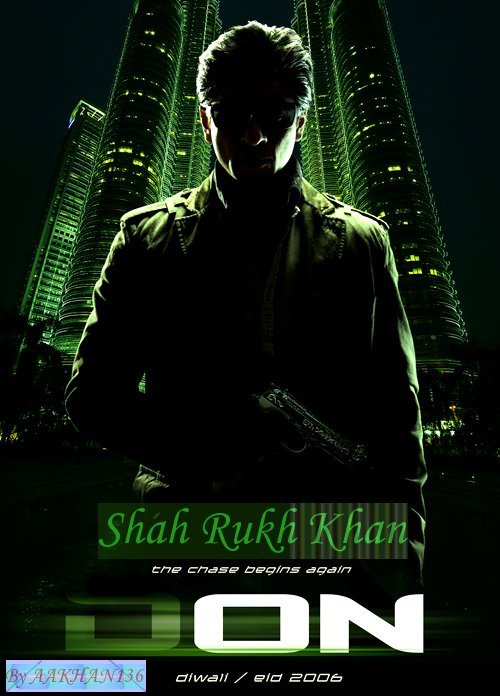
Farhan Akhtar’s Don saved my Eid


Festivals in a foreign country are a little disorienting. Though my mother is with us these days in Singapore and the nearest mosque is just two minutes walk from my apartment block, Eid came and went like a strange day, sans any halo or glamour.

The taste of festivals grows stale with adulthood, I guess.

And Eid was a little strange here because people don’t even embrace each other like back home; a handshake is all you may get, if you are lucky or imposingly enterprising.

This was my third Eid in Singapore. The only difference in the day was in the form of our sartorial newness and some culinary extravagance for the palate. The occasion was sweetened by the visit of some very dear friends.

Like back home, we decided to mark the departure of Ramazan by paying a visit to the Iblees House (read cinema hall), for verily Iblees (the devil) is freed by Allah the day Ramazan ends.

I remember, as kids, we used to necessarily go to a cinema hall to watch a movie on Eid every year. Theatres always had high-profile films up for release on the ‘holy occasion of Eid’ in India. And getting a ticket was always a battle. We never had enough money to buy tickets in black. So it always meant blood and gore (literally) at the box office of old style cavernous theatres. And we somehow always managed to get the tickets. Otherwise we would watch the film standing near the gate after bribing our way to the doorman or usher.

And in a sort of déjà vu, the theatre nearest to my house was showing Farhan Akhtar’s Don. We were overjoyed to see a Hindi film being exhibited in a mainstream theatre (which mostly showed Hollywood fare, sometimes Hong Kong, Chinese and Japanese films too) in Singapore, that too, in our neighbourhood. Thank you Shaw Brothers.

Now, Don has been an eagerly awaited film. From the start, as if, people were expecting Farhan Akhtar to trip over this project. There was excitement for the project but I sensed that it was a negative kind of excitement. People have been getting tired of watching Shahrukh Khan. Farhan’s last movie, Lakshya was a dud. You get the picture?

And some even expressed their dismay at Farhan’s selection of Don for a remake. It was no Deewar or Kaala Pathar. Why remake Don? It was made in 1978 by Chardra Barot, and I never saw even the b of his biography in the umpteenth articles written on this remake.

The hidden idea behind the sneer was this—Farhan was making a big mistake. Half written by his father (a Salim-Javed script), many said it was a mediocre film. It might be a mediocre film but it was hugely popular in its time.

But Farhan knew what he was doing. He was always confident about this project. And if you have seen the movie you’d know why.

I have a special attachment with Don. I was barely in my teens when I first saw this movie. I saw it in a rundown, bamboo and tin theatre, sitting on hard wooden benches, without any food or drink. I saw it seven times in seven days, falling in love with the pan chewing Vijay (Amitabh Bachchan) from Allahabad putting on the Don’s garb, and mouthing those manly dialogues—impervious to the sunrays peeping through the holes in the theatre’s tin roof.

And here was this Don shot in Malaysia and being shown in a Singapore multiplex—this time the metrosexual SRK putting on the post-millennium clever role of a legendary character. The first few scenes are like typical Bond films—with gadgets, explosives and all.


SRK for AB. Bebo for Helen. Priyanka for Zeenat. Om Puri for Om Shivpuri, Arjun Rampal for Pran, and Boman Irani for Iftekhar. That is the cast for you.

I had read the film’s review on Rediff.com, and both reviewers thought poorly of the film.

I think that did a good thing for me. It lowered my expectations.

From the first frame itself, the film had a sleek look, and a definitive style. If you remove the songs, it is like any other commercial Hollywood thriller, with double climax, and the wailing police and ambulance siren at the end of the film, the hero being put on a stretcher to be taken to the hospital. End of story. But that is where you get the edge of the seat jolt. The film ends and you wish it had just started. Clever Farhan. Watch out for Don 2. Folks, mark my words—there are enough motivations to chase Don and finish him off.

Unlike Gary Oldman in the Nokia phone ads, some old Hollywood soul has said that for a film to be successful, you just need a good first reel and a good last reel. I guess Farhan has stuck to that principle and come out a winner. Don’t mind all the garbage between the first and last reel. Most of it, if not all, was fun.

I guess when Farhan thought of re-making this film, he considered this angle—what if Don, who dies in the early part of the original film, saw Chandra Barot’s Don, and decided to restart his life. What changes would he make in the narrative? I think, with that, Farhan turned the story on its head—he has in fact tweaked the basic premise of the film and what fun it was to realise that clever twist by the end of the film.

Farhan has literally translated “Don to pakadna mushkil hi nahin, namumkin hai” into the film’s theme and has carved out a new age James Bond type Indian anti-hero out of the original character. Farhan’s re-imaging of this role is worth applauding, and more than that, I salute his confidence to carry it off. SRK has done it with panache, without hamming a bit.

Yes, some characters seem to be miscast. Pawan Varma as Narang and Boman Irani as DCP De Silva could have been played well by someone else? Who? No idea. And what is Om Puri doing in this film? Nothing but he is there to dodge the viewer’s suspicion. Arjun Rampal in Pran’s role is lost in the woodwork. But then all these character hardly matter much—it is all in all SRK who dominates every frame. And believe me it is quite believable. After all movies are about suspension of belief.

I have only one complaint against Farhan. Dude, in the credits, you should have given ‘Re-written and Re-directed by Farhan Akhtar’ instead of an insipid Written and Directed by Farhan Akhtar. But is that much of a complaint?

Thanks for saving my Eid, the cast and crew of Don.

Friday, October 20, 2006

Black Dahlia vs The Departed

Last weekend, when an opportunity arose to watch a movie in the local multiplex (it is a 7 minutes walk from where I stay), I had to choose between Martin Scorsese's The Departed and Brian de Palma's Black Dahlia. I chose the latter as I had seen the original, Infernal Affairs, the Hong Kong film behind Scorsese's remake.


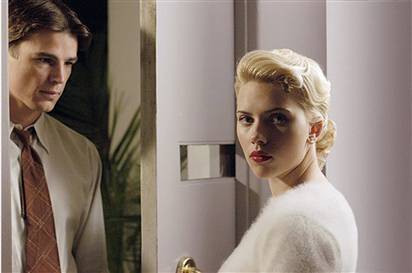
I was disappointed with Black Dahlia which is a murder mystery and the story of relationships as well. The saving grace of the film is Mia Krishner(her audition videos are tasteful); another interesting part of the film is the family of Hilary Swank. Hilary looks totally unattractive in this film, and sometimes, the look on her face is like gosh, what am I doing in this film. The film is based on a James Ellroy's novel about two 1940s L.A. cops, the same writer behind the superb L A Confidential, but this de Palma film comes no where near that one.

Meanhile, The Departed is doing very well, and despite being a remake, is No. 1 at the Singapore Box Office. The film reviewers are going ga ga over this movie where Hong Kong has been replaced with Boston.


Director Scorsese admits in this interview that "from now on, I will only make remakes of Asian films." By Asian films, he means China, Hong Kong, Taiwan and not India:


Scorsese's introduction to Chinese-language cinema came with the late director King Hu's A Touch of Zen (1969), he said. Countless others followed before the director saw John Woo's seminal shoot-'em-up The Killer (1989) and was blown away.

"You can't go near that, you can't even begin," Scorsese said, gesticulating wildly. "As far as my skills as a film-maker, you can't. That's taking our films and their culture and mixing everything up together.

"Even if I had a moment where I said to myself: 'Gee, maybe I can make a film like John Woo,' the minute I get to design the shoot or I get behind the camera with the cinematographer, many times I've said: 'My god, I've done this shot five times already in two other movies.'"

Undeniably, the maestro always leaves his fingerprints on his films. The Departed is no exception.

While following the Hong Kong original's premise, the film is quintessential Scorsese — a loud and brash gangster epic that's reminiscent of slow-burning thrillers like his Cape Fear (1991).

Set in a grimy-looking Boston, Damon takes the Andy Lau role of a gangster who infiltrates the police while DiCaprio tackles Tony Leung Chiu Wai's part as an undercover cop who penetrates the mob syndicate run by kingpin Jack Nicholson.

"It doesn't matter if it's Boston, Chicago, New York, Miami, anywhere," said Scorsese of the decision to shift the action from Hong Kong to Boston. "It all filters down to survival level on the streets. There's a war on the streets. If they make one mistake, they're killed. They're dead."

Asked about what influenced his depiction of the violence in his films, his eyes — framed by two shockingly thick, black eyebrows set behind thick glasses — darted around as if he was searching for the answer.

He gave up.

"The violence in my films, I really don't know what to say. I approach it the way I thought I experienced it," Scorsese said. "There's absurdity in some of the violence, but that's just the absurdity of being alive."

Born to Italian-American parents, the man who would go on to become one of America's most respected film-makers grew up in a working class area of New York.

"And part of that environment was organised crime. It was difficult," he said.

Andrew Lau, who co-directed Infernal Affairs, gives credit to Scorsese for his remake.

"Of course, I think the version I did was better," Lau was quoted as saying to Hong Kong's The Apple Daily newspaper. "But the Hollywood version is pretty good, too. Scorsese made the Hollywood version more attuned to American culture."

While The Departed is his first remake of an Asian film, Scorsese said it wouldn't be the last.

"I admire and respect their works, all of the Chinese cinemas — Hong Kong, Beijing and Taiwan. I know I can't go there, so I've had to find my own way and that was interesting. The film I hope to make next is also a remake of another Asian movie," he said, laughing but declining to elaborate.

"We'll be remaking Asian films from now. That's it."


Full text of the article is here.

Hollywood has really become besotted with the Asian films as I have heard the same thing (love for Asian films) being said by so many Hollywood filmmakers, the most prominent being the Kill Bill director Tarantino.

Bollywood, are you listening?

The 'lived experiences' of the Indian diaspora

DID you know that an Indian, Edward Peters from Goa, sparked off the gold rush in New Zealand in 1853 — though he never got the credit for it? Or that there is hardly a country where an Indian community is not found?

Would it surprise you to learn that female Indian migrants are among the best-educated minority groups in most societies in the world?

Read the full text here.

Wednesday, October 18, 2006

India, not an important literary country: Naipaul


In an interview with Arno Widmann, Nobel Prize winner V.S. Naipaul talks nice and nasty as ever about Indian literature. "India is finding its feet. Slowly. But it might not become a really important literary country. It's too dependent on the rest of the world, on how they view its literary production. Books are being written for the international market and foreign critics. And the authors read the most diverse styles and think they can copy them. They think they can be Latin America, Günter Grass or James Joyce. Where is their own perspective, their own sensibility? This isn't only the case with Indian authors. There are the Chinese authors that write about the horrors of the cultural revolution; they've all taken 'creative writing' courses in the USA and write identically."

Many will contest this generalised claim but the good thing about Naipaul is that he has not revised his views for a long time. The only novel that Naipaul has recommended, to come out of India in recent years, is Tarun Tejpal's The Alchemy of Desire.

Sheela Reddy has this interesting remark in a recent Outlook story: "Let's face it: V.S. Naipaul was dead right when he declared the novel dead. And in his usual forceful way, he went on to hammer the last nails into its coffin by giving us not one, but two, dud novels: Half A Life and Magic Seeds."

Zee Nite in Singapore


Last Sunday was special for many Singaporean Indians. Zee TV, India's pioneering cable TV network ( now in 120 countries) brought to Singapore its first ever event, Zee Nite.

The show combined Zee TV stars/actors like Rajshree Thakur, Ajay Krish, Priti Puri, Pawan Shankar and singers from its hit Sa Re Ga Ma Pa talent hunt shows such as Himani,
Debojit, Twinkle and Vishwas. It was an interesting show and the young performers brought a lot of energy to the show.

Looking at the response, the show was definitely a success. Indians had turned up in hordes. I have noticed that Indians here just love entertainment, and most of the events from India, be it Indian musicians or shows like Zee Nite are always well-attended, which is definitely an encouraging thing for the organizers.

Saturday, October 14, 2006

Best time to be a writer in Asia


TODAY's columnist and well-known Singaporean poet Felix Cheong thinks that this is a great time to be a writer in Asia. Not only there is growing worldwide interest in writing from Asia but opportunities are also cropping up to support and grow Asian talent.

Excerpts from his Today Column:


THERE'S no better time to be a writer in Asia than now.

Just as Hollywood is gradually wising up to the wealth of film-making talent in the East, so too are international publishers. And we're not just talking about writers whose novels merely pander to the Western taste for exotica.

Take, for instance, the recent launch of mainland Chinese author Fan Wu's maiden novel, February Flowers.

About the friendship between two friends in Guangzhou and the sexual awakening of the narrator, the book has none of the hang-ups about Asian identity that characterise Chinese-American novels such as Amy Tan's The Joy Luck Club and Maxine Hong-Kingston's The Woman Warrior.

February Flowers is the first title to be released under a new imprint, Picador Asia, a division of literary powerhouse Picador.

Picador is owned by Macmillan Publishers in the United Kingdom and Picador Asia joins other divisions of the company such as Picador USA, Picador Australia, Picador Africa and Picador India.

"It's to cater to the growing demand for literary writing by Asian writers in English, both from within Asia and from the main English-language markets around the world," said Macmillan's managing director Daniel Watts in an interview with Today.

The 35-year-old was in town recently for the launch of February Flowers at the Raffles Hotel, along with Toby Eady, a well-known literary agent acting as Picador Asia's publishing consultant.

Watts disclosed that Picador Asia plans to issue three titles in the coming months, such as The Eye of Jade by another Chinese writer, Diane Wei Liang.

Each of these authors is committed to a two-book deal, with another five or six projects that have yet to be inked. Also in the pipeline are commercial non-fiction books and, possibly, children's fiction.

But the print run, he admitted, will be modest — 20,000 copies of each book, packaged in different editions for the Asian, Australian and British markets.

"To be honest, we don't have bullish, ambitious sales targets," Watts conceded. "We're not doing this to make a lot of money but because we believe in building a destination for Asian writers to put their m
ark on the literary scene around the world."

The world according to Kiran Desai


Kiran Desai, the Man Booker Prize winner for this year, thinks that writing is a dangerous profesion.

"I think anyone who is writing seriously and trying to write seriously, find it really easy to disappear. It is really quite a frightening realisation that you can really go and that you can do yourself great mental harm. It is quite a dangerous profession, it really is," she says in an interview in The Hindustan Times.

I remember reading in a report how her mother warned her about the demands and dangers of the writing profession. And yet she has managed to do her mother proud.

Kiran has a deep and nuanced understanding of the immigration issues. Here is a very thoughtful passage from the interview where she asks if all acts of immigration should be seen and depicted as acts of heroism:


Of course my life has been exactly one of moving between countries and places. But like I said, that has also been the experience of my family. It is an old story. So a lot of it has been witnessing what other people have been through. While characterising the judge, I did read a lot of old IAS memoirs of 1939, which were fascinating. Describing this entire journey during that time period. Going to England and returning while the freedom movement was going on. They were also working for the British and I drew a lot from that research. Some of them writing more frankly than others.

But again, I found that it is quite a common story. People returning to having found themselves transformed, experiencing a kind of disconnect. The same thing happens today, people going to the States for example and then being completely unable to relate to their families. And that's a choice. They make the choice not to relate to their families. You find that there is a huge amount of cruelty taking place. The fact that they are in America lets them make their immigrant journey a very heroic one. There is a lot of insistence as well that people write novels that look at immigration as a heroic act. Books about people who overcome great odds to come to the virtuous land. In reality I think it is not that kind of journey at all. It can often be a very cruel journey and a very selfish one.

Thursday, October 12, 2006

Orhan Pamuk wins the Nobel Prize for Literature


After Kiran Desai's Booker win, here's comes the splendid news of Turkish writer Orhan Pamuk winning the Nobel Prize for Literaure:

"The Turkish author Orhan Pamuk, whose trial on charges of "insulting Turkishness" was dropped earlier this year, has won the 2006 Nobel prize for literature.

"The Swedish Academy praised the author's work, which includes the bestselling novels Snow and My Name is Red and a memoir of his home city, Istanbul, saying that "in the quest for the melancholic soul of his native city [he] has discovered new symbols for the clash and interlacing of cultures."

Here's more.