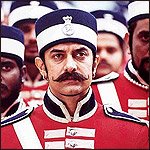
Wednesday, May 17, 2006

Beloved


In a survey by the New York Times, Toni Morrison has emerged as the beloved of the literati, of course, as an American writer. We can't even call it a prejudiced view or an colored opinion, right? But some do find a problem with this choice. Read more here.

In another notable development, did you think that authors are solitary creatures, and they don't need any company? If you did then think again. Here is a report by NYT:

"With authors fiercely battling for attention in a media-saturated world, an increasing number of writers — from first-time novelists like Ms. Dean to celebrities like Madeleine K. Albright, the former Secretary of State — are visiting people where they spend much of their time: at work." (Authors Meet Fans Far From Bookstores, at Company Events)

Londonstani


Ok, ok, I am late in talking about Gautam Malkani and Londonstani (almost rhymes). Actually, we were all so much caught up with the Kaavya episode that we completely forgot to celebrate this English author of Indian origin who has penned a novel titled Londonstani. For those who judge an author by the amount of advance he got, Malkani should impress. As the story goes, Malkani reportedly got an advance of, ahem, 300,000 Euros in Frankfurt Book Fair. Now, in dollar terms, that is more than what Kaavya got, right?

The novel is also making waves for its lingiuistic cleverness and the issues of identity and gender. Please see the links at Kitaab.

Malkani has been working with the Financial Times for the last seven years. He studied at Cambridge. Aren't you impressed enough to buy the book?

Sunday, May 07, 2006

Sex and the tale of two cities


Two sperate events but linked by sex, and Muslim sentiments are involved in both the cases. One takes place in Jakarta, in the capital of the Islamic state of Indonesia. Another in the Muslim dominated state of Jammu and Kashmir in India.

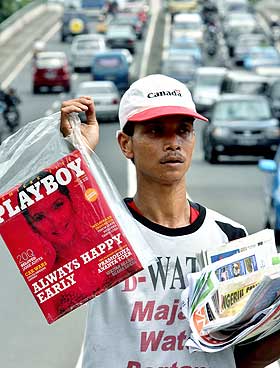
In April, according to reports, hardline Indonesian Muslims vandalised the office of Playboy magazine, protesting against its publication in that country, also the world's most populous Muslim nation. The protesters also destroyed several copies of the Indonesian Playboy, which unlike the U.S. original does not show any nudity. Despite being a much tamer version, the magazine sold out very quickly, thanks to controversy surrounding its publication.

Following strong protests, Playboy Indonesia has decided to delay its second edition for security reasons.

In Kashmir, angry Muslims have reacted over a sex scandal allegedly involving some former ministers. They destroyed the house of Sabina, the alleged kingpin of the sex scandal, and set her belongings on fire.

The report says that the sex racket was exposed after police seized a CD containing pornographic clips of a young girl, Sabina, who said that several politicians and police officials forced her into prostitution.

While the Indonesian magazine is on hold amid questions of freedom of expression and Islamic laws, it remains to be seen if the exploitative Kashmiri politicians and officers are going to be identified and prosecuted.

Bollywood lessons


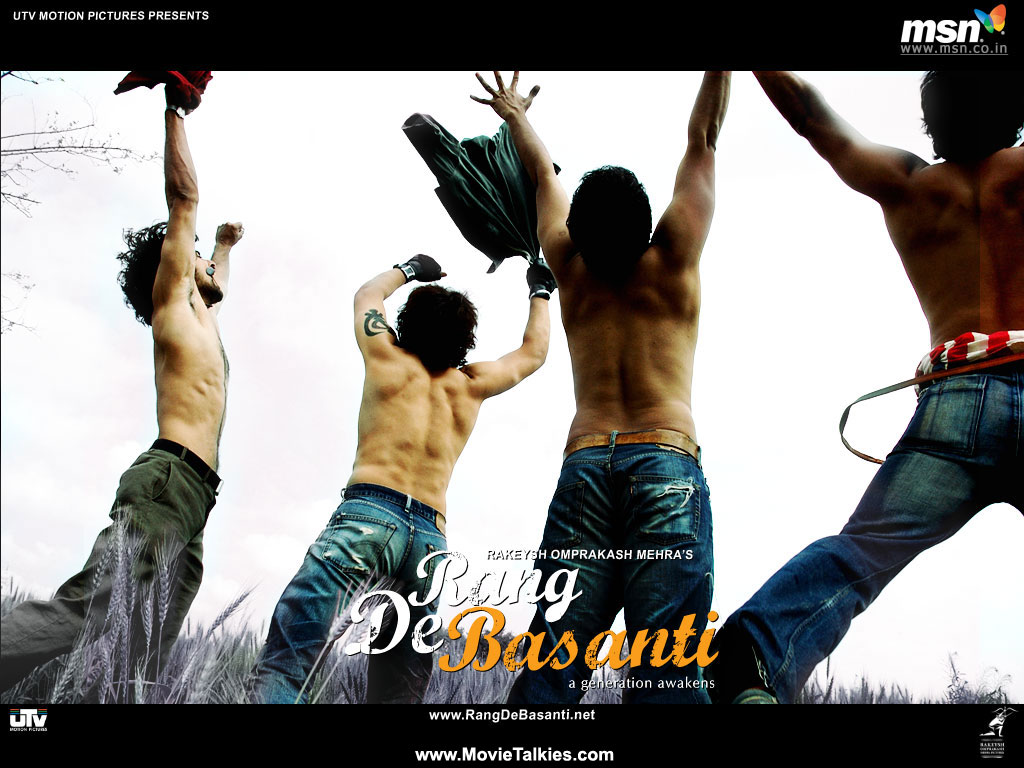
Bollywood is making waves these days--both at home and abroad. As 'Sholay' enters school textbooks, school teachers in Delhi are being exposed to more films from the Mumbai film industry. As per a report in The Hindustan Times, the Delhi government is holding special screenings of Munna Bhai MBBS and Rang De Basanti as a part of its teachers' training programme.

It is definitely an interesting way of training teachers. And both the films are remarkable in their own ways.

A few years ago, we too made a documentary film (India's economic transition through Bollywood) that showed India's economic milestones through clips of scenes gleaned from hundreds of films. India's two maverick economists, Amir Ullah Khan and Bibek Debroy, had piloted the project. The film was shown in management schools across India.

Recently, Google has also funded a non-profit venture in India that uses Bollywood film songs as a literacy tool. Great going Bollywood!

Sholay in school text books


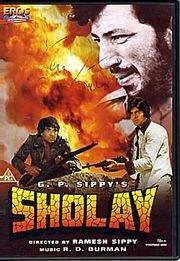
Ramesh Sippy's Sholay (1975) is India's one of the most loved and talked about films ever. It has been loved by generations of Indians, and it enjoys the distinction of being India's first biryani western. On the Indian box office it has been one of the top ten grossers of all time. In short, it has many firsts and records to its credit.

The latest distinction achieved by Sholay is academic. It is the first Indian film to be included in a school text book:

"For the first time in the history of Indian academia, an entire chapter in a school textbook will be devoted to a mainstream Bollywood blockbuster.

Ramesh Sippy’s multi-starrer Sholay has been added to the Broadway course workbook No 5 for Class V students of CBSE.

"Published by Oxford University Press, the inclusion of Sholay is a continuation to the chapter on films and film-making in the Broadway book, which is designed to help students communicate effectively and accurately in English.

"The National Curriculum Framework 2005 postulates that the multi-lingual character of our society be treated as a resource and school teaching should focus on what the child understands. Since films are an integral part of our culture and Sholay is one of the most influential films, it has been included in the course, said sources.

"The text on films and filmmaking in the course book and Sholay in the workbook is a representation of Indian drama in the life of a child. The choice of Sholay was made because it is a different film in many ways. Besides,we wanted children to be aware of the prominence attached to the Indian film industry," said an insider." (The Times of India, April 29)

More on Sholay is here.

Saturday, April 29, 2006

Kaavya's Opalgate


At first, I was reluctant to blog about this issue, but ever since the plagiarism news got broken in The Harvard Crimson, the floodgates of comments and blogs opened, and Harvard Sophomore Kaavya Viswanathan has been pilloried uncessantly.

I am not writing this post to defend Kaavya here. Nor do I support any act of plagiarism (though copycat Bollywood does it all the time but no one touches its whiskers). Not 14 as initially reported but about 39 counts of plagiarism were found in Kaavya's novel, How Opel Mehta Got Kissed, Got Wild and Got A Life. Interesttingly, the novel was not selling like hot cakes. It was not on the NYT bestseller list. At Amazon, it was at some 300+ rank. Once the controversy broke out, Kaavya has hit the international headlines. She has become one of the top ten searches at Technorati.

Is this a story of getting all the glory (the USD 500,000 advance, a movie deal, international coverage) for an eighteen year old and then giving everything away, nosediving into the abyss of disrepute? Or there is something more to it than what meets the eye?

I guess people should pay attention to a NYT report that addresses this angle:

"Nobody associated with the plagiarism accusations is pointing fingers at Alloy, a behind-the-scenes creator of some of the hottest books in young-adult publishing. Ms. Viswanathan says that she alone is responsible for borrowing portions of two novels by Megan McCafferty, "Sloppy Firsts" and "Second Helpings." But at the very least, the incident opens a window onto a powerful company with lucrative, if tangled, relationships within the publishing industry that might take fans of series like "The It Girl" by surprise."(The NYT)

Look at these important facts and decide for yourself:

1. On the copyright page of Kaavya's novel — and the contracts — there's an additional name: Alloy Entertainment

2. The relationships between Alloy and the publishers are so intertwined that the same editor, Claudia Gabel, is thanked on the acknowledgments pages of both Ms. McCafferty's books and Ms. Viswanathan's "How Opal Mehta Got Kissed, Got Wild, and Got a Life."

3. Alloy owns or shares the copyright with the authors and then divides the advances and any royalties with them.

4. The publishing contract Little, Brown signed is actually with Alloy, which holds the copyright to "Opal" together with Ms. Viswanathan. Neither Little, Brown nor Alloy would comment on how much of the advance or the royalties — standard contracts give 15 percent of the cover price to the author — Ms. Viswanathan is to collect.

5. After the breaking out of the controversy, both the books have gone up in the Amazon.com rankings. It means sales of these two books multiplied.

6. Ms. McCafferty, from whose novels Kaavya has stolen the phrases, has clearly said that she was not pressing any legal charges against the erring author.

7. Kaavya has gone on leave from her school. In a few week's time, the story will be forgotten, and Ms Kaavya will go on with her normal life.

Based on the above, please make up your own mind. And let me know if you have anything to say on this.

Wednesday, April 26, 2006


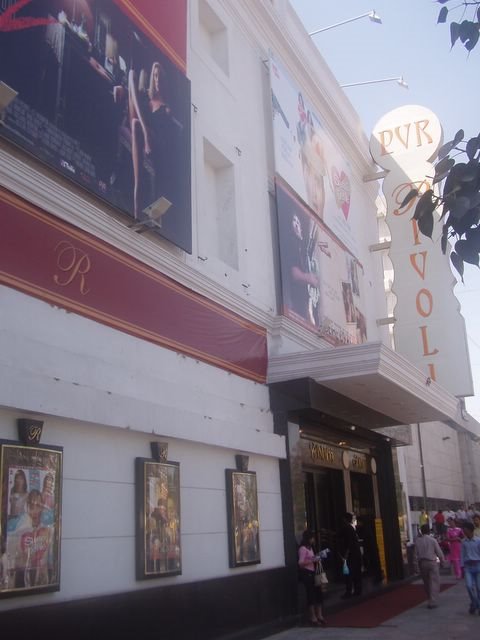
Rivoli Theatre in Connaught Place Delhi--the once seedy cinema hall has got a facelift under the PVR Cinemas, the new owners. You can see the poster of Basic Instinct 2 on the wall.  Posted by Picasa

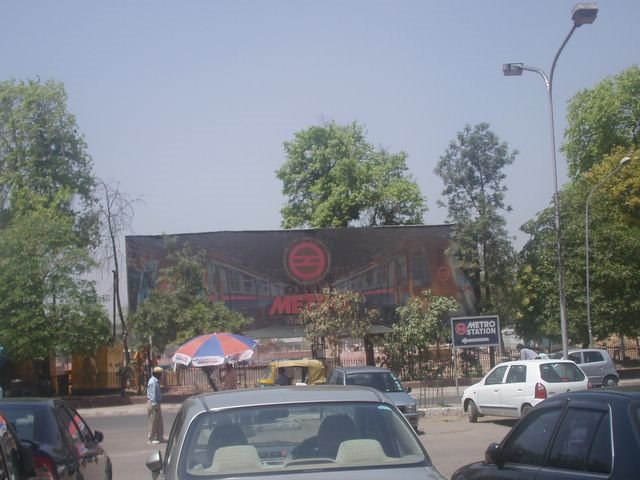
Delhi's Metro, under construction at Connaught Place, the heart of Delhi. Delhiites are proud of the Metro Network. A view from the outside (from a recent trip to Delhi) Posted by Picasa

Thursday, April 06, 2006


Rising China: Picture taken at the Careers 2006 Exhibition, Suntec City, Singapore  Posted by Picasa

Wednesday, March 29, 2006

Hong Kong steps onto the international literary stage


While Singaporeans/Malaysians keep sqabbling over Singlish/Minglish vs Queen's English, Hong Kong has been taking great strides in the literary arena.

The IHT reports: "...Hong Kong becomes home to a new international literary prize and to the relaunched Asia Literary Review. Major overseas publishers and agents, meanwhile, have been making regular visits or setting up operations in this area.

"The fear that Hong Kong would lose its English-language heritage after the 1997 handover from British to Chinese rule now seems misplaced...

"At the same time, greater China is playing an increasingly important role on the international literary scene. More Asians are learning English and buying more foreign books. Meanwhile, American and British publishers are becoming more interested in Asian writers, particularly young Chinese ones, whose works have the potential to sell well in the West.

Hong Kong is working hard to position itself in the middle of this potentially booming book trade. Last week Man Investments announced it would sponsor a new Hong Kong-based literary prize starting in the autumn of 2007 - its only literary prize aside from the two prestigious Booker awards. According to a news release, judges will read unpublished English-language works looking for "new Asian literature to be brought to the attention of English-reading audiences around the world."


Singapore is also trying its best to promote the reading/writing culture through lietarary festivals, etc. However, there seems to be shortage of talent, which is strange. Singapore's libraries are so well stocked and all kinds of books and writing opportunities are available. Sadly, for example, this year no writer could be found worthy of the annual NUS-FASS and TOPH Writing Fellowship.

The writing fellowship had made a brilliant start in its inaugural fellow, playwright Huzir Sulaiman, and the award-giving authorities feel that his accomplishments both accurately reflect the aims and spirit of this fellowship, as well as stand to benefit the literary scene in Singapore as a whole. This year, despite an encouraging number of submissions, the judges did not feel that there was an applicant who could fulfill the aims of the fellowship.

Citizen Coetzee


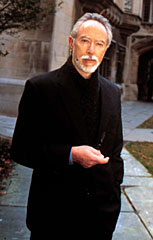
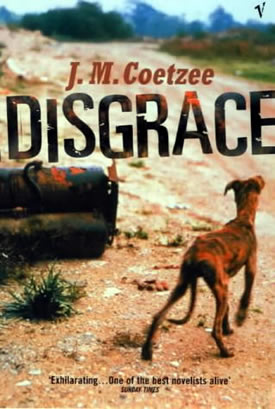
J M Coetzee is one of my favourite writers. I have recently finished reading two of his novels, Youth, and Disgrace, and have fallen in love with his sparse yet powerful writing style. Though I had read his The Life and Times of Michael K years ago, I can still recall the intensity of the experience of reading that novel and the kind of impact it had on me.

His superb novel, Disgrace ends at a situation where the disgraced protagonist, David, a former professor, is at a loss in a socio-politically changed South Africa, and as you read on the novel, you feel such pain, lonliness and purposelessness in life along with the main characters. But then, as he suggests to his daughter somewhere in the story, why doesn't she migrate to the Netherlands (?); he is ready to pay for all her expenses, and all that. And you think that why doesn't David act on his own advice--why doesn't he migrate to somewhere else if his life has so hopelessly fallen apart in SA?


Well, that's how the story ends. Now, interestingly, news is that the South African writer of Disgrace has shifted his base to Australia. He has become an Australian citizen.

He says in a report: "I did not leave South Africa because I had to," he said. "In fact I didn't so much leave South Africa — a country with which I retain strong emotional ties — as come to Australia."

Coetzee, an honorary research fellow in the English department at the University of Adelaide and the first author to twice win the Booker Prize, first visited Australia in 1991 and fell in love with Adelaide.

"I was attracted by the free and generous spirit of the people, by the beauty of the land itself and — when I first saw Adelaide — by the grace of the city," he said.

A few interesting articles

Here I am just bunching together some of the interesting articles/news items that I have read recently:


Shalimar the Clown wins Hutch Crossword Book Award


Salman Rushdie's Shalimar the Clown had a reason to smile when it won the Hutch Crossword Book Award 2005 for English Fiction. On March 21, Krishna Sobti, who wrote The Heart Has Its Reasons, and translators Reema Anand and Meenakshi Swami won the award in the Indian Language Fiction Translation category. Suketu Mehta's Maximum City: Bombay Lost and Found won in a newly introduced category for English Non-Fiction.

Literary Novels Going Straight to Paperback

Even critically acclaimed literary novels often have a short shelf life in hardcover, with one-half to three-quarters of the books shipped to stores often being returned to the publisher, unsold.

That has a growing number of publishing companies, from smaller houses like Grove/Atlantic to giants like Random House, adopting a different business model, offering books by lesser-known authors only as "paperback originals," forgoing the higher profits afforded by publishing a book in hardcover for a chance at attracting more buyers and a more sustained shelf life.

Translation Of Books Into Malay Still Scant

Translation of books in foreign languages into Malay is still scant in the country compared to other countries, Deputy Education Minister Datuk Noh Omar said Wednesday.

Tuesday, March 28, 2006

V for Vendetta


Wachowky Brothers' V for Vendetta turned out to be a gripping fare. Though I am often wary of comic books making a meaningful transition to the screen (at least for me), this one scores well on this count. The film's message is so relevant, and comes loud and clear by the end of the movie. The blowing up of the British Parliament by the revolutionary (tagged 'terrorist' by the government and the media) V and his protege, Evey (Natalie Portman with a shaved head) clearly hints at the failure of parliamentary democracy in our age and how this form of governance has come to be hijacked by the wrongdoers. V says: "People should not be afraid of their governments, governments should be afraid of their people."

The hero is an idea, can be any face behind the mask--a creation of the monstrosity of the wrongdoers. V says: "Beneath this mask there is more than flesh. There is an idea, Mr. Creedy, and ideas are bulletproof." I like that.

The best part of the film is V, played by Hugo Weaving (remember Agent Smith of Matrix?). James Purefoy was originally cast as V but left the project. Hugo Weaving was then brought in to take his place, after four weeks into the shooting. Apparently, he had a great time rubbing Portman's shaved head.

Portman and Stephen Fry are also good in the film. There is an interesting sequence in the film wherein Stephen Fry, the host of a TV talk show, shows how the terrorist and the Chancellor are the one and the same. The hints are very strong if seen in terms of contemporary politics. Vull varks to the Vachowsky vrothers vor this very valuable vork of celluloid viction.

Aamir Khan speaks out against the media


The courageous Aamir Khan, one of the finest Indian actors of our generation, has lashed out at the Indian media for their ever stooping standards of journalism. The recent issue of Tehelka runs a long interview with the actor (‘Mainstream media has become like film media 15 years ago,’April 1, 2006). It was time someone pointed these things out. However, it is sad that it had to come from an actor.

He points out issues like these: "Things that are headline news now used to be tidbits or half a page meant to be entertaining. Now that’s the main story while farmers dying are being pushed to small, unimportant sections".

"The media coverage of the Gujarat riots or Jessica Lall murder are definitely
positive examples. These are the issues they should be dealing with. Issues that deal with survival and life".

"'I watch Doordarshan for news now. You have background scores now in news channels to emphasise or create the mood or emotion behind a flood or earthquake. They have
background music for Chrissakes! It’s shocking. Next you’ll have dialogue writers and sfx!"

Read the full interview here.

Only last night I watched Aamir's latest release, Rang De Basanti. It is an impressive film: technically sound, with contemporary feel, and quite rooted. Only the ending was a little melodramatic, though the director has tried to excercise some restraint (I mean it could have been worse in somebody else's hands).

Monday, March 13, 2006

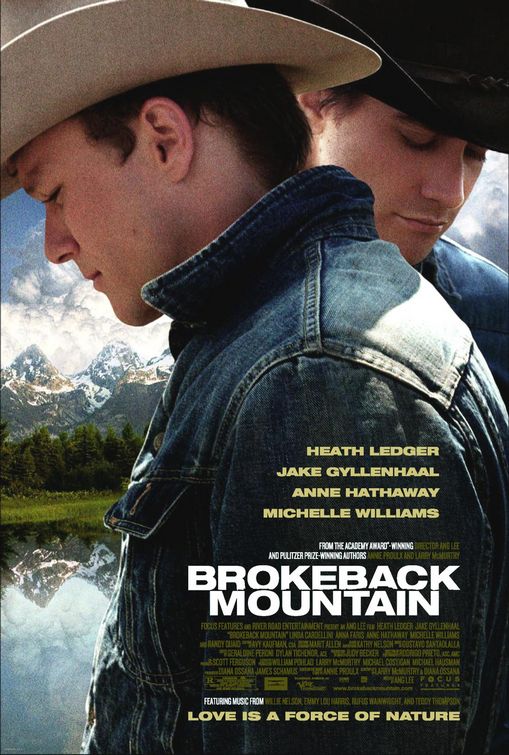
Brokeback Mountain


So, why did Brokeback Mountain finally lose out to Crash in the best picture category?

The writer of Brokeback Mountain, Annie Proulx (a) has a reason to offer:

"And rumour has it that Lions Gate inundated the academy voters with DVD copies of Trash - excuse me - Crash a few weeks before the ballot deadline. Next year we can look to the awards for controversial themes on the punishment of adulterers with a branding iron in the shape of the letter A, runaway slaves, and the debate over free silver."

In the same essay, she makes an interesting point about acting and how good acting is perceived by Hollywood:

"The prize, as expected, went to Philip Seymour Hoff-man for his brilliant portrayal of Capote, but in the months preceding the awards thing, there has been little discussion of acting styles and various approaches to character development by this year's nominees. Hollywood loves mimicry, the conversion of a film actor into the spittin' image of a once-living celeb. But which takes more skill, acting a person who strolled the boulevard a few decades ago and who left behind tapes, film, photographs, voice recordings and friends with strong memories, or the construction of characters from imagination and a few cold words on the page? I don't know. The subject never comes up. Cheers to David Strathairn, Joaquin Phoenix and Hoffman, but what about actors who start in the dark?"

Sunday, March 12, 2006

Syriana


I had missed George Clooney's "Good Night and Good Luck" but luckily I was able to catch Stephen Gaghan's "Syriana" for which Clooney won the Best Supporting Actor Award at this year's Oscars, and proclaimed from the stage, "Thank God, we are so out of touch."

Thank God there are still Hollywood actors and filmmakers like Clooney who stay out of touch with the times and make films like Syriana.

Of course, I had seen the movie before the Oscars. Brokeback Mountain had to wait. Syriana was serios business.

Stephen Gaghan (winner of the Best Screenplay Academy Award for Traffic) presents a tightly woven political thriller, weaving together many personal stories into a jigsaw-puzzle sort of narrative structure, that unfolds against the intrigue of the global oil industry. There are four basic stories here. CIA operative (George Clooney) faces his own people turned against him, young oil broker (Matt Damon) falls prey to a family tragedy and becomes advisor to an idealistic Gulf prince (Prince Nair Al-Subaani played by Alexander Siddig). Corporate lawyer Jeffrey Wright "faces a moral dilemma as he finesses the questionable merger of two powerful U.S. oil companies," while in Persian Gulf, a disenfranchised Pakistani teenager (Mazhar Munir) gets brainwashed and becomes a suicide bomber. All the four stories come together to a powerful and literally explosive climax.

I especially liked the Prince Nair Al-Subaani's character who represents the forward-looking face of the Arab world but is decimated by the powerful Oil lobby. The question that comes to the viewer's mind is: Is oil wealth and democracy incompatible and if yes, then why? I guess the answer lies more in Washington than in the Gulf region. The film is highly recommended.

But is Clooney trying to scare the public by making such films? Christopher Dickey writing in The Newsweek thinks so. His essay "Age of Anxiety" on this theme is quite interesting. On Syriana he has this to say:

""Syriana," so self-consciously obscure that even I had trouble following it, is entirely a work of fiction. Never mind the titles that say it's based on the 2002 memoir, "See No Evil" (Crown), by former CIA agent Robert Baer. The intrigues surrounding Clooney's character take place in a fictional emirate that might be Saudi Arabia, but has a history a little like Qatar and a landscape that is, quite literally, Dubai, where much of it was filmed. Yet it's not about any of those places, in fact. It's about the United States, and it's the style that's important, not the substance. "Syriana" feels like many a spy film from the 1970s, when Watergate and Senate investigations into the American intelligence establishment created a pervasive sense that government was out to defend itself regardless of the cost to American civil liberties, human rights and common sense."

Some quotable quotes from Syriana:

"In this town, you're innocent until you're investigated."

On the Arab world: "You want to know what the business world thinks of you? We think a hundred years ago you were living out here in tents in the desert chopping each others heads off, and that's exactly where you're gonna be in another hundred. So yes, on behalf of my firm, I accept your money."

On Corruption: "Corruption ain't nothing more than government intrusion into market efficiencies in the form of regulation. That's Milton Friedman. He got a goddamn Nobel Prize. We have laws against it precisely so we can get away with it. Corruption is our protection. Corruption is what keeps us safe and warm. Corruption is why you and I are prancing around here instead of fighting each other for scraps of meat out in the streets. Corruption is why we win."

Wednesday, March 08, 2006

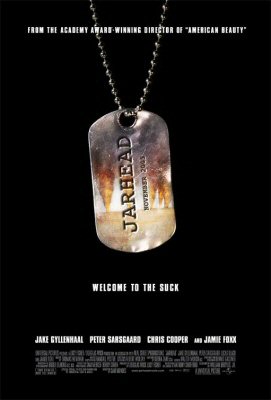
Jarhead


A few weeks ago when I ventured into a local cineplex, I was not sure which film to watch. What I had in mind was Jim Carrey's Fun with Dick and Jane but when I saw the poster of Jarhead with the 'Directed by Sam Mendes' tag, I knew where I was headed for. I knew it was not going to be a fun film but I was ready for some thought-provoking fare.

I was rewarded. I was watching a war movie with hardly any war happening (yeah, there were some bombing shots and the hero, a trained sniper scout, yearns for some action but gets nary a chance). There is a moment when the action-hungry protagonists almost break down when they don't get an opportunity to 'kill' their enemies. That is as satirical as one could get.

Jake Gyllenhaal, playing Anthony Swofford, is brilliant. I was watching this guy for the first time, and was not even aware that he was playing the (co) lead in the much-admired Brokeback Mountain. Others such as Jamie Foxx and Peter Sargaasard have turned in admirable performances.

I loved Jake when he mouthed lines like these (off screen):

"Suggestive techniques for the marine to use in the avoidance of boredom and loneliness. Masturbation. Re-reading of letters from unfaithful wives and girlfriends. Cleaning your rifle. Further masturbation. Re-wiring Walkman. Arguing about religion and meaning of life. Discussing in detail, every women the marine has ever fucked. Debating differences, such as Cupban VS Mexican, Harleys VS Hondas, left VS right-handed masturbation. Further cleaning of rifle. Studying the mail order bride catalogue. Further masturbation. Planning a marine's first meal on return home. Imagining what a marine's girlfriend and her man Joey are doing in the alley or in a hotel bed."

More quotable quotes are here.

'Jarhead' is based on former Marine Anthony Swofford's best-selling 2003 book about his pre-Desert Storm experiences in Saudi Arabia and about his experiences fighting in Kuwait. Filmed in the Imperial Valley in Southern California, which features conditions very similar to Iraq. Marines did use one of the local towns, Brawley, for training purposes due to similarities to Iraq. Interestingly, some desert scenes were also shot on a Universal sound stage with lights doubling as burning oil wells. The lights were later replaced with burning wells courtesy of ILM.

Tuesday, March 07, 2006

Why I love Woody Allen?


Call me whatever you want, but I can't stop loving Woody Allen. Why? His brand of humour (middlebrow?), full of people from the literary world, is hard to find anywhere else. That's why.

I loved this piece by PRADEEP SEBASTIAN in The Hindu Literary Supplement. He says on Allen:

"
Some critics now see Allen as a middlebrow sensibility masquerading as highbrow. But that's exactly why we like Allen, that's why we relate to him more than any other intellectual comic. This middlebrow sensibility is the strongest connection we have with him. It's baffling why critics valorise the lowbrow and the highbrow while mocking the middlebrow."

"Many of us intellectual, sensitive, arty types are middlebrow in our tastes and middlebrow in our sensibility. Like Allen, we too regard high culture with awe. If we can't drink deeply from it, we want to at least partake of it, want it to rub off on us."

"But often the closest we come to it is a peek at it: surrounding ourselves with Penguin classics we've never read and will probably never get to read — at least not all of them. What we possess is a smattering, a sampling of culture: we seem to know what Kafkaesque means without having read too much of Kafka, and we catch up with the great classics via movie versions of Jane Austen, Thomas Hardy, and Henry James. This, of course, is a caricature of the cultural aspirations of a middlebrow but that's what Woody Allen is all about. Allen won't be funny if this tension between the middlebrow and highbrow didn't exist."

Read the entire piece here to enjoy the discussion on "The Whore of Mensa" and "The Kugelmas Episode." Not to miss.

How do you write?

So how do you write? Standing up, sitting down, in the bathtub, on the back of your lover...

Here is an interesting article by diplomat-cum-novelist Navtej Sarna on the several odd ways of writing that famous writers have adopted from time to time. Some examples:

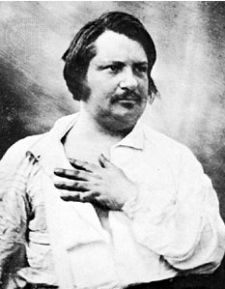
"Honore de Balzac would try and write 24 hours at a stretch and then take a five-hour break before starting over again. He consumed huge quantities of black coffee to beat fatigue and actually became a victim of caffeine poisoning at age 51. Alexander Dumas suffered from indigestion and the pain would wake him up in the small hours. He would then work on his writing desk till breakfast that usually consisted of a solitary apple under the Arc de Triomphe. His poetry would be written on yellow paper, fiction on blue and non-fiction on rose-coloured. Victor Hugo would give away all his clothes to his servant with instructions that he should not return until Hugo had completed his day's work. Ben Franklin and the author of Cyrano de Bergerac, Edmund Rostand, preferred to work in their bathtubs. Mark Twain and R. L. Stevenson could only write when lying down and Virginia Woolf, Thomas Wolfe and Lewis Carroll had to stand up to deliver. Thomas Wolfe, at least, who confessed to finding it easier to add 75,000 words than cut down 50,000 must have been very tired on finishing Look Homeward, Angel. D. H. Lawrence found stimulation in climbing mulberry trees in the nude. Voltaire used his lover's back as a writing desk."

"The poets, of course, had favourites of their own: Coleridge is said to have dreamt up the scene for "Kubla Khan" under the influence of opium; Eliott would revel in writing if he had a head cold; Poe liked to have his Siamese cat on his shoulder and Schiller liked sniffing at rotten apples every once in a while."

May I add one more from my side? Urdu poet Firaq Gorakhpuri used to write all naked in a room after getting drunk. Interesting, isn't it?

I do it like any normal pen pusher. What about you?

Tuesday, February 07, 2006

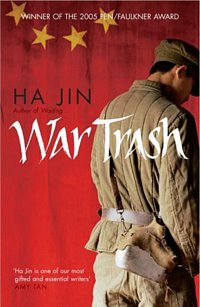
To become a writer you must embrace failure


Hell, no, I'm not saying this. Ha Jin is saying this. If I did, in the first place, you won't believe me. Some think I'm nuts any ways.

I came across this interview of Ha Jin just by chance. Here he makes an important point, and I have all along been bogged down by the feeling that he describes so well:

I read something you said in an online interview [at collectedstories.com] that intrigued me. Basically, you said that to become a writer you must embrace failure. What did you mean by that?

The more ambitious you are, the stronger the sense of failure, because there are so many [laughs] great books that have been written. When I was at Emory University I often taught a story by Kafka: “The Hunger Artist.” That story explains the psychology of a writer. Very often we write not because we want to achieve—maybe there was that desire, but so much has been accomplished. We can’t do anything better. On the other hand, you have to go on and continue.
That’s why I think some sense of failure is essential to a writer from the very beginning.

How true! Read the whole interview here in Agni.

Agni also has a terrific interview with late Saul Bellow. It is a must read.

One Night@Bollywood


Today I read in the ST that Chetan Bhagat's bestselling novel, One Night @ The Call Centre has been optioned for filming by Bollywood director Rohan Sippy. Great news for Chetan! Very few Indian filmmakers opt for making films out of modern novels and when they do, they hardly succeed in hitting the bull's eye. Anurag Mathur's all time bestseller The Inscrutible Americans was a box office (bo) dud as a movie. Dev Benegal had adapted Upamanyu Chatterjee's English, August with great elan and some bo success. Mira Nair is adapting Jhumpa Lahiri's The Namesake. Hope it does well.

But Chetan's news gives me a sense of deja vu. His first novel, Five Point Someone, was also rumoured to have been optioned for filming. But we are still waiting for the film...Any way, good luck Chetan!

The World is Not Against You


Sounds like the title of the next 007 movie, doesn't it?

But hey, it is just a word of advice. From Vikram Seth. To an aspiring writer. Mark Vender. The full line: "The world is not against you. It is only indifferent."

Read this ravishing rant on "getting published" (Hay Fever) in The Guardian. If you already have, read on ahead.

Indian writer Samit Basu (author of The Simoquin Prophecies and now The Manticore's Secret) commented on this aspect of the writerly life (stirred by The Sunday Times publishing saga) in an interesting article, Fishwrap. He wrote:

It’s an interesting question – despite the emergence of a generation of writers, artists and filmmakers in India who are perfectly content creating work for a growing and engaged audience without ‘explaining India’ being an overriding consideration, we still look to the West for validation, and not just in monetary terms. How justified is this outward-looking approach if the West is so insecure about its own ability to appreciate literature and the arts? For every Rupa Bajwa and Siddharth Dhanvant Shanghvi racking up impressive advances and literary awards worldwide, how many quality works of Indian literature are consigned to dustbins every time publishers and agents decide to clear up the slushpile? How many masterpieces never see the light of day because their writers aren’t sexy enough? How long will we have to wait before any art form (except film and music) finds a large enough market within the country for the sad state of affairs abroad not to be a factor in the lives of the artists concerned? When can we stop having our own literary scene messed up for us by people abroad and, instead, mess it up ourselves in our own special Indian way?

I guess there are no easy answers. It is the market, be it in India or Malaysia or Singapore, or anywhere, that decides everything--in the larger sense. Even books. Marketing is over-riding art, as it were. As Walt Whitman would have said: Poets are not in-charge here. It is the bankers and the manufacturers, the publishers and the marketers.

Last year, The Straits Time had brought out a special Saturday report on the publishing scene in Singapore. I guess Sharon Bakar had covered it in her blog. The gist of the story is that even in a small country like Singapore, there are a large number of writers (of all kinds) looking for publishers but there are very few of them who don't see any market for budding local writers. Many writers have, in desperation, turned to self-publishing, and almost all of them are yet to recover what they had invested in their dream ventures. Forget about profits!

Nothing surprising about it!

I guess in an age when most readers are aspiring writers, the barriers to publishing will rise higher up. And those who will get published may not be necessarily the best writers of our age, but those who persist and try on will surely make it one day. When the best of the lot will give up and turn to a more profitable business, the mediocres will sure have a chance. Let's stay optimistic then, even at the risk of sounding simplistic, even foolhardy. What do you say?

Kaleidoscope of Rhythms

Ustaad Zakir Hussain and the accompanying musicians held a riveting concert last Sunday in the Esplanade Concert Theatre. Singapore's President Nathan was also there to enjoy the show. Apart from the music, it was the Ustaad's sense of humour that had the audience in rapture.

My impressions of meeting with the Ustaad has been published by Malaysiakini. Read the piece here.

Thursday, January 26, 2006

Two new articles


Here are two new articles:

Raising the Asian Flag: Asian filmmakers rebel against Hollywood

AMU at the Crossroads

Enjoy and send me your comments!

(Photograph: Zafar Anjum)

Monday, January 09, 2006

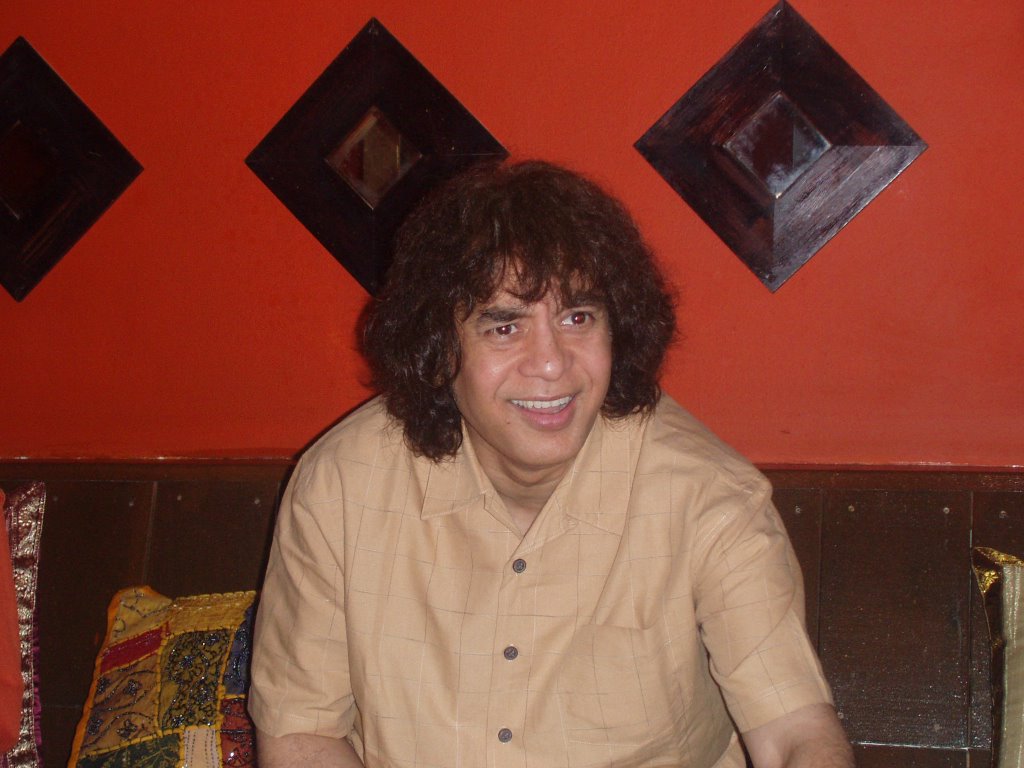
Meeting Ustaad Zakir Hussain


Ustaad Zakir Hussain is one of the most charismatic musicians of India. I had seen him act in movies, or playing the tabla on tv, or promoting Taj Mahal tea in commercials. But nothing beats the experience of meeting the man in person.

Jan 8. Sunday. Noon. I reached the New Age Indigo Bar in Boat Quay braving the incessant rain. Ustaad Zakir Hussain was to meet the presswallahs there. He was on his way to the USA where he was teaching music at the Princeton University.

The Ustaad is holding a major show "Kaleidoscope of Rhythms" (World Fusion Music) on Feb. 5, 2006 (7: 30 pm) at the Esplanade Concert Hall. The show will also feature percussionists and musicians such as Terry Bozzio, Giovanni Hidalgo, U Shrinivas (Mandolin), Fazal Qureshi (Tabla), Salim Merchant (Keyboard), Vijay Chauhan (Dholki), and Kala Ramnath (Violin).

The press meet was meant to brief the journos about the show. The turn out was good--who could resist the charm of Zakir Hussain, even on a rainy day.

From the moment he burst into the room (an informal setting of low laying Indian style furniture), Zakir Saheb took over the scene. After personally meeting everyone, he started talking about the gig and the musicians. His talk was so lively and so full of erudition, and at the same time, he was able to present his knowledge and his sense of Indian music in such a simple manner that I was thoroughly bewildered. He was articulate like a professor. No wonder he is teaching at an Ivy League university.

His talk ranged from his own musical inspirations to Bollywood and Hollywood music. I will write about it in a different piece. But from the discussion, I am sure the Feb gig in Singapore is going to be a mind-blowing experience. Those who cannot come to Singapore can catch the ensemble at Bombay and Dubai around the same time. Not to be missed. (Tickets are on sale through SISTIC Hotline and outlest islandwise)

Sunday, January 08, 2006

Interest in Indian authors declining?


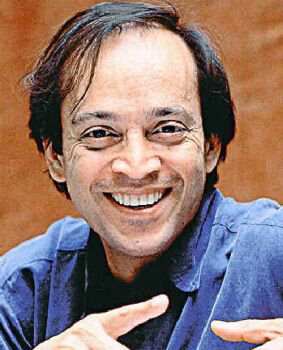
Meet novelist Vikram Chandra, after a long time, here. He is off with his beard now. He took many years to hit the bookstands again. His last book was a collection of short stories, Love and Longing in Bombay.

For his new novel, loosely based on the Bombay mafia, he got a million dollar advance and naturally hit the headlines.

In this interview, here answers at least two interesting questions:

Do you think that getting a huge advance puts pressure on a writer to "perform"?

I'm mostly done with the book, so in this case no. I'm very grateful but finally it is an external event I have to keep at a distance in the same way you maintain a distance from reviews or praise. Because your job finally is to imagine and you do your storytelling because you love to and want to. If it interferes with you sitting alone in front of the blank screen then it is damaging.

Despite there being many more Indians writing in English, why is there lesser interest in the West in Indian authors?

No, I don't think there is a real decline. May be they've just got over the initial bubble. The excitement that happened in the late 1990s with people in the West getting very excited and publishers pouring money into one or two books; that kind of artificial or frenzied bubble inevitably flattens out. I think what is happening now is that there is a constancy and at least I see in the United States more people than ever reading Indian authors.

For more, go to The Hindu website.

Friday, January 06, 2006

Patna Roughcut/Siddharth Chowdhury


These days, apart from Chetan Bhagat and Samit Basu, one more name is doing the rounds of the litblog world in India. The name is Siddharth Chowdhury. The cause: his debut novel, Patna Roughcut (Picador).

First about the novel. And I quote from Kolkata's The Telegraph:

Patna Roughcut (Picador, Rs 250) by Siddharth Chowdhury is about nothing in particular. Ritwik Ray is a small-time reporter in Patna, and recounts nostalgically his growing-up amid the Bengali diaspora in Patna colonies and Delhi University campuses. There is Harryda, his dreams in technicolour, Iladi who attained at 13 the wisdom “very few women attain even at menopause”. Then there are those typical years in college, full of love and idealism. And finally Mira Verma, who Ritwik meets again as wife of his professor. A rather tame start for a first novel.

Forget the last sentence. The book has received praise from reviewers such as Jabberwock and Hurree Babu. J wrote:

Patna Roughcut shows its hand early on; the very first paragraph of the book ends an overwrought analogy with the observation: "The poor shouldn’t dream. They can’t afford it." The remaining 180 pages are an illustration of this statement. Cynical though the idea is, it defines the lives of untold millions in this country - people who reach for greater intellect and "culture" and find that it destroys their pragmatism; that they are still unable to escape the vicious circle of their existence. Chowdhury’s achievement is that he filters this pessimistic worldview through a style that is tender, empathetic and even humorous when appropriate. This is crucial to the book’s success as a story of the aspirations and dashed hopes of young Indians caught between different worlds.

Being a fellow Bihari, I was intrigued as I did not know much about Siddharth. I wanted to.

I could connect with his book's theme as well and it sounded even a little familiar. My own first novel, Of Seminal Fluids, covered the similar ground of dream and reality, though with much less demonstrable success. I will admit that.

So, bending to my curiosity, I searched about Siddharth. This is what I found out about him:

Born in Patna in 1974, Siddharth Chowdhury earned an M A in English literature from Hindu college, University of Delhi before drifting into publishing. His stories have been published in The Brown Critique, Debonair, The Asian Age, The Sunday Observer and the Tehelka Literary Review among other places. He lives in Delhi and works as an editor with the house of Manohar. He is presently working on a short novel.

The Week has this to say about Siddharth:

Of the dozens of Indian writers in English whose debut novels are scheduled for publication in 2005, the one most likely to make a splash is Siddharth Chowdhury. His publishers, Picador, cannot stop talking about their lucky catch. Even Pankaj Mishra, not known for effusive compliments, raved about Chowdhury’s earlier collection of short stories for its brilliance in capturing "the bittersweet irony of our compromised modernity". The novel Patna Blues is being hailed as even better.

Chowdhury describes his own work as "charting the socio-political landscape of Patna and Bihar from the 1950s to the 1990s". As the newspapers testify daily, Bihar’s socio-political landscape is indeed tumultuous, but no English novel has so far sought to capture it. Chowdhury does so through the eyes and experiences of three men and two women who grow up in Patna during these four decades. But the book, says Chowdhury, is also about "literature and art, and the role they play in defining our lives".

Not surprisingly, Chowdhury himself grew up in Patna, though he presently lives in Delhi where, until recently, he worked with a publishing company. He began writing at 19 ("Rather late," he says, "most writers seem to start at 10 or earlier") but was soon publishing short stories in Indian and foreign publications. His first collection of stories, Diksha at St Martins, appeared two years ago to immense praise.

Before Patna Roughcut, he debuted with a collection of short stories, Diksha at St Martin's (Srishti).

As a fellow writer I wish him all the best and do look forward to reading his novel.

Naipaul's 'disguised' book rejected by Agents/Publishers


I first read it in Kitabkhana, and it amused me no end.

You take a famous manuscript (book) by a famous writer and send it out to agents/publishers with an unknown name for their kind consideration. Chances are they will not only not recognize the content (even Booker prize-winning content!), they will even reject it with complete professional sanity. It was done before with perhaps a Thackery or Dickens novel. I don't remember exactly. The Sunday Times has done it again like a sting operation:

Top novels in disguise rejected by publishers

THERE is no greater award for a writer than the Nobel prize for literature. Five years ago the accolade went to VS Naipaul in recognition of his 50-year writing career.

Naipaul, born in Trinidad, also won the 1971 Booker prize (now the Man Booker) in Britain, where he has lived since 1950. It was awarded for In a Free State, his novel about displaced colonials on different continents.

Dennis Potter, the TV dramatist, praised its “lucid complexity”. He wrote: “Do not miss the exhilaration of catching one of our most accomplished writers reaching towards the full stretch of his talent.”

Surely the special qualities of such timeless prose would be recognised by today’s publishing industry? Surely a first-time novelist who matched the standard of Naipaul at his best would be snapped up?

The Sunday Times sent out the opening chapter of In a Free State to 20 agents and publishers to find out. Only the names of the author and main characters were changed.

None of the agents or publishers spotted the book’s true pedigree. And instead of experiencing Potter’s exhilaration, they all sent back polite rejections.

Laugh):

Sunday, January 01, 2006

The box office heavyweight


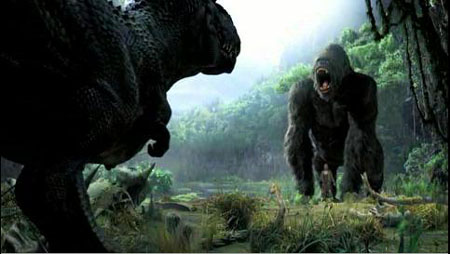
I was all excited to see Peter Jackson's King Kong on the big screen (I had not seen the 1930's one) and when the sneak shows were announced, I bought a ticket and gleefully entered the movie-hall like a child.

King Kong! Oh, what a love triangle!

Peter Jackson has done a clever job. The film is a potent mixture of so many mise-en-scene seen earlier. It has Chicago (the struggle of an actress), Titanic (love blossoming on a ship), Jurassic Park (The island with the big lizards), and Godzilla (the big creature wreaking havoc in New York)--all rolled into a single snazzy package! The special effects are too good. The impact on the box office is, no wonder, gigantic.

Mangal Pandey--A wasted effort?


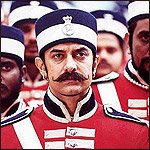
The year's biggest disappointment was Ketan Mehta's Mangal Pandey--The Rising. Amir had given four years of his life to this film and he famously grew a trademark sepoy moustache for this film. Despite all best intentions, the film lacks a narrative unity. The stoy being told through the ballad of Mangal Pandey does not work and the first few scenes are so disjointed, they are more like 'Episodes in the life of Mangal Pandey'. The problem is with the script. Mangal's character is not well-developed. We have not been given any glimpse into Mangal's personal life which is very important from the pov of character development. Amir and others have acted well. The second half is tauter but at the end of the film, one feels dissatisfied. Rahman's music is very good but has often been wasted in the film.

The New Year


Today is the first day of 2006 and I am writing my first post of the year. My new born daughter has practically kept me awake the whole night, and this morning only after quarter to six, when she was finally lulled to sleep, I could do some work. After that, this post. So welcome again and let me say it to you: Happy New Year!

First things first. Any new year resolutions? None. And I have not smoked for the past one week. Before that I had taken a smoking break for a while, in a smoking, non-smoking career spanning over a decade now. Writing-wise any new plans? Yes, sure. There is a novel ms to polish, and another ready to be written. The idea is ready and I should start writing a few paragraphs everyday from today onwards. Should. That's a dangerous word!

2005 was unique for me. I did not write a single short story. I started writing one and it is still unfinished. Was I trying to be a perfectionist? Maybe. You could say that. I want to achieve the kind of balance and beauty that I felt in Hemingway's The Indian Camp. I personally like stories that have both soul and brevity. Long short stories? I generally keep a distance from going to such lengths unless necessary.

The highlight of 2005 was the launch of Kitaab.org. I started it as a resource window on Asian writing in English. So far it has done fine. Some of my friends have been kind enough to support the site with content. I had expected many others to join me in this endeavour. At times I suffered disappointments. Turns out that people are not as interested in literature as in their own selves, which is understandable.

The Asia Pacific Writers Network also registered its presence in 2005. It is a great development for Asian writing.

The year gone by was strong in non-fiction. I did manage to write a few non-fiction pieces here and there. It was a great experience, especially working with some of the American editors. In 2005, I also read more of non-fiction than fiction. Here is a representative list:

Non-fiction: All the President's Men, Liberty or Death (Patrick French), The Idea of India (Sunil Khilnani), Maximum City, The Jaguar Smile, 13 Ways of Looking at the Novel, Literary Occasions, Desperately Seeking Paradise, Holy War, The Crisis of Islam, The New Jackals, The Art of Fiction, Naked Woman, etc. (You could see a lot from my backlog)

Fiction: Shantaram, Woody Allen--The Complete Prose, The O.Henry Prize Stories 2003, The Vintage Book of Indian Writing, Tropic of Capricorn, Psychoraag, Transmission, Away, Be Cool, etc.

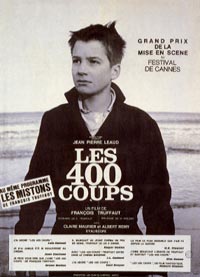
In movies, I must would have seen over 200 films this year (all languages, both new and old). This year's some of the best movie experiences were: Black, The Downfall (German), The 400 Blows (French), The Decalogue (Polish), Nine Queens (French), Madadayo (Japanese), Melinda and Melinda, Pather Panchali, How Green Was My Valley, In the Mood of Love (Chinese), Farewell, My Concubine (Chinese), Bunty Aur Bubly, Paheli, Sarkar, No Entry, Cyrano de Bergerec, Sideways, The Life Acquatic with Steve Zissou, King Kong, Main, Meri Patni Aur Woh, Spanglish, Maria Full of Grace, Man on Fire, etc.

Truffaut's The 400 Blows will remain an unforgettable film for me. Was it the precursor of all those great Iranian films?

I was really impressed with Sanjay Leela Bhansali's Black but when I saw The Miracle Worker, I lost some of the respect for the filmmaker, at least in terms of orginality. But to be fair to Bhansali, his work is glossier and he has taken the story foreward in his version of the Hellen Keller story.

Chandan Arora's Main Meri Patni Aur Woh is simply delecious. There is a Basu Chatterjee kind of old world charm here. Hazaroon Khwahishen Aisi was also remarkable. Chocolate was high class trash. How could Vivek Agnihotri shamelessly copy the supercool Usual Suspects? More than that, how could a talented actor like Irfan Khan agree to play Bollywood's version of Kevin Spacey? I am yet to see Maine Gandhi ko Nahin Mara but I hear it is really good. Apharan is also supposed to be good.

Hopefully, Bollywood would try to be more original in 2006. And there would be great novels to read. I am already running a huge backlog... God help me!

Friday, December 09, 2005

My Recent Writings


All these weeks and months, I have been busy writing and publishing stories here and there. Some of my latest writings that you can check out are listed here (with links):

Indians Roar in the Lion City (Little India, USA)

Hollywood's Indian Adventures (Asia Times, Hong Kong)

From Lantern to Lights (Outlook, India)

Salaam Mira! Tribute to a Global Talent (Jamini, Bangladesh)

BTW, Jamini is an exquisite arts journal published from Dhaka with excellent articles and pictures. I was really impressed by its quality. The Mira Nair profile is not available online but if you want to read it, I could send you a pdf. So, quite a lot to delve in there. Happy reading! And comments are always welcome.

Friday, December 02, 2005

Who is Preeta Krishna?

Preeta Krishna (India) is the winner of the 2005 Commonwealth Short Story Competition (administered by the CBA or Commonwealth Broadcasting Association) for her story 'Treason', which deals with the loss of innocence in a harsh world. Three other Indian (or PIO) writers--Mareet Sodhi Someshwar (Hong Kong), Swapna Kishore and Suchitra Ramadurai--have won in the category of Highly Commended stories.

Did you know about this competition?

I guess many have not heard about it. I am sure with time and more exposure, literary prize watchers will put it under their radars as they do about the Commonwealth Writers Prize (for the novels and administered by the Commonwealth Foundation, an intergovernmental organization). Remember the controversy about the Commonwealth Writers Prize for a novel by Amitava Ghosh. Ghosh had refused to take it for political reasons.

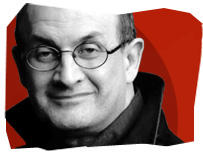
Rushdie wrote a scathing essay on the idea of Commonwealth literature in his collection of essays, Imaginary Homelands. The title of his essay was "Commonwealth Literature does not exist." Rushdie makes his point very clear in these words:

"The nearest I could get to a definition sounded distinctly patronizing: 'Commonwealth literature,' it appears, is that body of writing created, I think, in the English language, by persons who are not themselves white Britons, or Irish, or citizens of the United States of America..."

He further says: "By now 'Commonwealth literature' was sounding very unlikable indeed. Not only was it a ghetto, but it was actually an exclusive ghetto. And the effect of creating such a ghetto was, is, to change the meaning of the far broader term 'English Literaure' ...into something far narrower, something topographical, nationalistic, possibly even racially segregationist."

One may agree or disagree with Rushdie's observations, but the fact remains that such venues are big confidence boosters for the young and fledgling writers.

Seems a lot of people from the Commonwealth countries participated in it. The winner, Preeta Krishna, is joined by twenty-five other writers from across the Commonwealth who have won prizes in the competition. Their stories are being published in a CD-Rom format.

Before you jump to type Preeta Krishna in your google search engine, let me tell you that there isn't much info on her on the net. In case you find something on her, don't forget to share it with me.

Sunday, November 13, 2005

Remembering Nirmal Verma and Amrita Pritam


In the last few weeks, India lost two literary figures: eminent Hindi writer Nirmal Verma and Punjabi poetess and novelist, Amrita Pritam.

While I did not have the pleasure of reading Amrita's novels or poetry, I had the good fortune of reading some stories and novels by Nirmal Verma. For the uninitiated, Nirmal Verma is among the most significant names in contemporary Hindi literature. He shot to prominence with his first collection of short stories, Parinde ("Birds," 1959), which gave a major boost to the Nayi Kahani (New Story) movement in Hindi literature. He reinterpreted and reshaped the short story in Hindi, India’s national language. His "art powerfully communicates the elusiveness and complexities of emotions and sensibilities in a way that no narrative can," it noted. Verma has several short stories collections, novels, essays, and travelogues to his credit. I have done a profile of Verma in my latest column in Kitaab. Check it out here (see under Columnists).

For Amrita's profile, there's one by Khushwant Singh (An Stamped Ticket; Outlook) whose "uncharitable remarks" about the deceased poetess has kicked a mini literary storm in the Punjabi literary circles. Excerpts from Mr. Singh's appraisal:

"Amrita was a woman of modest education and wrote only in Punjabi. She could barely read any other language and was therefore unsophisticated in her writing. She was besotted with Bollywood. For her, the ultimate in success was to have some of her novels and short stories filmed. Her first novel to be translated from Punjabi into English was Pinjar (The Skeleton). I did the translation, purely out of love for her. I gave her all the royalties on one condition: to repay me with a candid account of her love life. She did over many sessions. The only passion she admitted to was for the film lyricist Sahir Ludhianvi whom she had never met. But she had corresponded with him. I was disappointed. "All this could be written on a postage stamp," I told her. So when she wrote her autobiography, she called it Raseedi Ticket (Postage Stamp)."

The piece gets more frank as you read further. I am not surprised as it comes from a writer who had written his own obituary!

Tuesday, November 08, 2005

Roy and Bunty Aur Babli


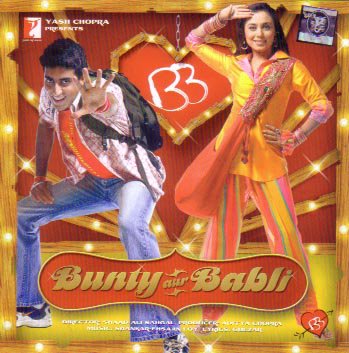
In the recent months, a Hindi film, Bunty Aur Babli, starring the father-son duo of Amitabh Bachchan and Abhishek Bachchan, did very well on the box office in India. The critics also appreciated the film for its portrayal of the aspirations of the youth of today's middle class India. I was pleasantly surprised when Arundhati Ray quoted a line from this film in her interview in the weekly Tehelka:

"There is the danger, especially for a writer of fiction, that you can become somebody who does what is expected of you. I could end up boring myself to death... It can be maddening, and I want to say like Bunty in Bunty aur Babli, ‘Mujhe yeh izzat aur sharafat ki zindagi se bachao…’"

Save me from this life of honor and gentlemanliness!

The interview is really interesting. In fact, all of Roy's interviews are thought-provoking. She has a fascinating way of putting things together, building a context, making a point. I quote some more--my favs from the same interview.

On the politics of resistence

"The facts are there in the world today. People like Chomsky have made a huge contribution to that. But what does information mean? What are facts? There is so much information that almost all becomes meaningless and disempowering. Where has it all gone? What does the World Social Forum mean today? They are big questions now. Ultimately, millions of people marched against the war in Iraq. But the war was prosecuted, the occupation is in full stride. I do not for a moment want to undermine the fact that unveiling the facts has meant a huge swing of public opinion against the occupation of Iraq, it has meant that America’s secret history is now street talk, but what next? To expose things is quite different from being able to effectively resist things."

On fame

"At the end of the day, fame is also a gruesome kind of capitalism, you can accumulate it, bank it, live off it. But it can suffocate you, block off the blood vessels to the brain, isolate you, make you lose touch. It pushes you up to the surface and you forget how to keep your ear to the ground. "

On money

"As for money, I have tried to take it lightly. Really, I have tried to give it away, but even that is a very difficult thing to do. Money is like nuclear waste. What you do with it, where you dump it, what problems it creates, what it changes, these are incredibly complicated things. And eventually, it can all blow up in your face. I’d have been happier with Less. Yeh Dil Maange Less. Less money, less fame, less pressure, more badmashi. I hate the f***ing responsibility that is sometimes forced on me. I spent my early years making decisions that would allow me to evade responsibility; and now…"

On the culture of celebrityhood

"People are constantly in search of idols, heroes, villains, sirens — in search of individuals, in search of noise. Anybody in whom they can invest their mediocre aspirations and muddled thinking will do. Anyone who is conventionally and moderately ‘successful’ becomes a celebrity. It’s almost a kind of profession now — we have professional celebrities — maybe colleges should start offering a course.It’s indiscriminate — it can be Miss Universe, or a writer, or the maker of a ridiculous TV soap, the minimum requirement is success. There’s a particular kind of person who comes up to me with this star-struck smile — it doesn’t matter who I am — they just know I’m famous; whether I’m the ‘BookerPrizeWinner’ or the star of the Zee Horror Show or whatever is immaterial."

On failure

"In this freak show, this celebrity parade, there’s no place for loss, or failure. Whereas to me as a writer, failure interests me. Success is so tinny and boring. Everyone is promoting themselves so hard."

On search for perfection

"I think we all are just messing our way through this life. People, ideologues who believe in a kind of redemption, a perfect and ultimate society, are terrifying. Hitler and Stalin believed that with a little social engineering, with the mass murder of a few million people, they could create a new and perfect world. The idea of perfection has often been a precursor to genocide. John Gray writes about it at some length. But then, on the other hand, we have the placid acceptance of Karma which certainly suits the privileged classes and castes very well. Some of us oscillate in the space between these two ugly juggernauts trying to at least occasionally locate some pinpoints of light. "

To read the entire interview, click here.

A Converstaion with Vikram Seth


Vikram Seth is touring the world promoting his latest work, Two Lives. A few weeks ago, he was in India and lots of his interviews appeared in the Indian media. Outlook magazine even published an interview in which Seth's mother also played a part (she also wrote a book that was published one or two years ago).

Now Seth is in the US and SAJAers Sreenath Sreenivasan, SAJA co-founder and Aseem Chhabra, SAJA board member, caught him in a web, err, a live webcast! The webcast is archived here. If you would rather read the conversation, go here.

I am quoting some interesting comments here:

On A Suitable Boy: "… the publisher asked, can we have a few more foreign characters to appeal to the foreign market… that’s why I was rather surprised that the… interminable book about a rather obscure period of Indian history in the ’50s… without war, without the assassination of prime ministers, without… much in the way of sex… without even a glossary… was successful outside India…"

On how does a small town writer make him- or herself heard? "I’m sorry, I don’t really know… the first book I wrote… [describes how his dad told him to go to the library and look up publishers, and he mailed unsolicited manuscripts which died unheralded and unmourned on the slush pile]… Finally an editor looked at a chapter or two… I didn’t have an agent in the beginning, and I didn’t know how to get one… when I wrote The Golden Gate, I didn’t think I could sell something as strange as that [a novel in verse] through an agent…
Try to write what you’re [compelled] to write, not what the market tells you… the market didn’t tell me to write a 300-page novel in verse. Selling a 60-page novel in verse would have been impossible, so why 300?… my own method of entering print was rather unorthodox…"

Got the point?

Sunday, October 30, 2005

Writing is about hard work

Enjoyed reading this piece "Character Building" by Juliet Sutcliffe in The Guardian. It is about Juliet's experience of going through a Creative Writing MA course at East Anglia. Starting with enough skepticism about creative writing courses and their use, she concludes:

When I started at UEA I thought I would wholeheartedly recommend such an MA to anyone. Despite claims that all writing graduates are taught to churn out work in the same (ie the tutor's) style, nobody teaches much of anything at UEA. That's not a bad thing. But the MA is not an easy option. The sceptical journalist had it wrong: these courses are more likely to stop people writing than to foster wild fantasies about living off royalties.

An honest account. Read it here.

Thursday, October 27, 2005

Blogging has its price

With Freedom Comes Responsibility

Gone are the days when one could say anything behind the anonymity of cyberspace and get away with it

Read my article on blogging in Asia in The Bangkok Times (October 25, 2005). Click over the heading to read it online.

Tuesday, October 18, 2005

Troubled Paradise: Kunzru on Maldives, Deepika on Bali


Novelist Hari Kunzru seems to have had a bad time in Maldives. He recently went to the tropical paradise to have a nice time in the sun and sand but came back home a lot more angry. He writes in The Guardian:

"'However,' the tourist board site goes on, 'there is more to the Maldives than just that.' Too bloody right there is, as I found out the other day when I attended a meeting of PEN, the writers' organisation that campaigns for freedom of expression, working with people around the world who've been imprisoned or otherwise abused for writing or saying things their authorities don't like."

At the meeting I heard reports of torture, imprisonment and disappearances in these 'paradise' islands..."

Bali was in news again for terrorist bombings for the second time. Another paradise in peril! But the people of Bali have decided to fight terror with books and literature. Deepika Shetty of Channel NewsAsia was in Bali recently to take part in the Ubud Readers and Writers Festival. She had a great time there, and in her report in Kitaab, she shares some interesting anecdotes about writers like Michael Ondaatjee and Nury Vittachi. Enjoy!

Monday, October 10, 2005

Crush on Krrish...Hrithik Roshan in Singapore


Anybody who reads newspapers in Singapore would know that Hrithik Roshan is in town with his helmsman father Rakesh Roshan to shoot Krrish, the sequel of his box office blockbuster, Koi Mil Gaya--a Bollywood reinterpretation of Spielberg's ET.

Hrithik is the name of a rush for Bollywood lovers. When he burst forth on the Hindi movie scene a couple of years ago with Kaho Na Pyar Hai, girls began swooning in the cinema halls and on meeting him in person. He became a superstar, challenging the three Khans--Shahrukh, Salman and Amir Khan-- who have been ruling Bollywood for more than a decade now. But soon, his films began to tank at the box office (except Mission Kashmir) and his star power decreased. He emerged a winner again with his father's Koi Mil Gaya. Now he is working on the sequel of the film. He is also doing another film, Dhoom 2 in which he plays a negative character. He is, even now, one of the most powerful stars after Amitabh Bachchan and the three Khans. Saif Khan and Amitabh's son, Abhishek, can be called his competitors who have delivered many hits this year.

On my wife's insistence, I went to see Hrithik on the sets of Krrish. When we got wind of him, he was shooting at the Expo. When we reached there, the shooting was on. Hrithik, in an orange T-shirt over a light blue shirt and white sports trousers, was reviewing his action shots on a monitor. The crew was readying the lights to shoot a reaction shot of the heroine, Priyanka Chopra, a former Miss World. She was dressed in a greenish short dress and was supposed to clap at Hrithik after one of his heroic fights. Priyanka had to give about 10 retakes for a simple reaction shot. She was being directed by Rakesh and the action director Tony Chan (?). Hrithik had done his martial arts training in Hong Kong for this film. He had already suffered injuries shooting this film in Bombay. The film was also shot in Manali for forty days, revealed one of the crew members. It will be shot again in Mumbai and will be released in June 2006.

While the scene was being set up for Priyanka, Hrithik was getting his hair blow-dried and combed. He has grown long locks for the movie. When my dare-devil wife tried to take a picture of him from the front, he still getting his hair set, Hrithik got upset. "Excuse me," he said, a little loudly, bringing a large mirror in front of his face as a cover. "Ok, ok, no problems," said my wife and moved on. She had already taken his photo.

After Priyanka's take, the crew broke for lunch. The director, the stars, the ADs, and chief technicians ate their lunch together on a makeshift dinining table. The rest of the crew sat on the floor, here and there, and had their grub, complaining about the food. Maybe they were missing their Bombay food.

Many fans had assembled by then. They all wanted to photograph Hrithik and get themselves photographed with him. Post-lunch, a lady with a child began to shoot a video of Hrithik from afar. He was still sitting around the dining table with Priyanka when he noticed this. He immediately sent an emissary asking the lady not to videograph him. He was polite though.

In the next few minutes, Hrithik allowed people to have a contact session. The crowd jumped at him--kids, men, girls and aunties. For about five minutes, everyone got a chance to get a picture with Hrithik and Priyanka. It was an amazing moment. I had never seen fans mob a star before, and it all felt so surreal. The stars who were, till a few minutes ago, not even looking at the bystanders, were now all smiles for the cameras. That is showbiz.

I shot my wife beside Hrithik and Priyanka too. Her pilgrimage was over. We returned home.

On the way, my wife asked me: "Why didn't you get photographed with Htrithik and Priyanka?"

"Because I am not star struck," I said.

In fact, I was. Maybe only a little but I sure was. I was crazy about Bollywood stars, my demigods, when I was a kid. With time, the charm of Bollywood has worn off. And so has the magnetism of Bollywood stars for me. My demigods have changed.

Rushdie and Zadie


"The great silliness in the name of quality fiction"

Salman Rushdie, being what he is, is still being reviewed on the pages of lit mags. People are reviewing not only Shalimar The Clown but also judging and reassessing Rushdie as a storyteller, and what kind of road he (his pen) has taken since he became famous after the fatwa. Since his novel is out of the Booker race, it has become easier for the critics to rip apart the master. Surprisingly, I have not seen as many reviews of Coetzee's The Slow Man as of Rushdie's Shalimar The Clown. I don't understand why.

In the London Review of Books, Theo Tait writes about Rushdie's novel where he devotes the first three paragraphs discussing magic realism and how irrelevant it has become today:

With time and overuse, artistic style degenerates into mannerism. This is especially true of magic realism. Following the success of Gabriel García Márquez, a flood of semi-supernatural sagas was released all over the world – full of omens, prodigies, legendary feats, hallucinatory exaggerations, fairytale motifs, strange coincidences and overdeveloped sense-organs (all accepted placidly by their characters as part of the everyday run of things). Wonder and novelty were always an important part of its appeal, so the style had a built-in obsolescence: the decline into artificial gesture and cheap exoticism was inevitable (especially when British writers imitated South Americans, as they often used to do in the 1980s and 1990s).

The other problem with the style is its tendency to degenerate into a cosy and narrowly illustrative form of fiction, full of operatic clichés: passionate lovers, wise old women, tyrannical patriarchs – a sort of politically correct fairytale. Again, this is especially true of its anglophone variants: see the tedious fables of Jeanette Winterson, or the eccentric but warm-hearted villagers of Louis de Bernières.

These days, magic realism is deservedly out of fashion. But it’s worth remembering that it has been one of the great styles of the last fifty years...

He concludes by saying this: Shalimar the Clown will tell many readers that the recent history of Kashmir is a both a terrible tragedy and a fault-line in the modern world, which we ought to know about. This must be a good thing. But it is also a powerful testament to something completely different: the great sillinesses that are perpetrated in the name of quality fiction.

A thing of beauty

The opposite has happened in the case of Zadie Smith. With her On Beauty's inclusion in the Booker longlist, she has been winning rave reviews all over (I'm not saying it is because of that nomination). I am not going to discuss the merits of her latest novel here but it seems that the Booker nomination has done her book a lot of good. Remember, her novel was released later and had already got longlisted before it appeared in the market. In Rushdie's case, the book had come weeks before the nomination and many had already trashed it in the media.

Anyway, Frank Kermode has given her novel a balanced thumbs up in the same issue of LRB. He says:

What makes this novel a bit unusual is that it is conceived as an act of homage to E.M. Forster, ‘to whom’, the author writes, ‘all my fiction is indebted, one way or the other’. The acknowledgment is obscure and ‘one way or the other’ could, but probably doesn’t, mean ‘both by attraction and repulsion’. To take as a model Howards End, a novel published in 1910, need not be a mere game or stunt, but it does tend to steal the limelight of critical attention.

Read the full review here.

Changing hands

I recently read in a London newspaper that the ownership of Granta has changed hands, and so has that of the Times Educational Supplement. One of the rumours is about the folding up of the Times Literary Supplement. It has about 30,000 subscribers only. It will either die or will undergo some changes. Only time will tell but they say change is the unchangeable law of nature.

India's Literary Fortunes: Of Hemingway, Dons and Dollars

Hemingway and India?

There is hardly any connection, you'd say. Yes, that was right until now. Hemingway's last novel, Under Kilimanjaro, has an Indian character. I am yet to see the novel but I hope the Mr. Singh's role in this work will be better and meatier than the one played by Kabir Bedi (a bit role) in Out of Africa, a film based on the writings (and life) of Danish noblewoman and storyteller Karen ('Isak') Dinesen Blixen.

Here's the news: Under Kilimanjaro, Ernest Hemingway’s last novel that hit bookstores this month, has an Indian character.The 850-page manuscript was kept in a Cuban bank. It saw the light of day on September 27 — more than 44 years after Hemingway’s death in 1961.

Under Kilimanjaro, based on Hemingway’s experiences of an African safari months before he received the Nobel Prize in 1954, was released at a simple ceremony at Grand Forks in North Dakota, where its editor, Robert W Lewis, is based.
For more, go here.

Million Dollar Baby

But here is a bigger news (thanks Kitabkhana) : Indian novelist, Vikram Chandra, has landed a million dollar deal for his new novel, featuring Inspector Sartaj Singh and the Mumbai underworld. The novel is 800 pages long. Now I know what Chandra was doing while his friend, and co-writer of Mission Kashmir, was penning his Maximum City.
Here is the news: "...The Commonwealth Prize-winner’s new novel—his third book—has earned a million-dollar advance, putting him in an exclusive club of Indian authors that includes Salman Rushdie, Vikram Seth and Arundhati Roy. "

"The yet-untitled oeuvre has been signed for $1.3 million for its USA and UK rights alone. “The Indian rights still have to be worked out,” he adds, speaking from his home in Berkeley, California. The book will be published by Harper Collins in the USA and Canada and Faber and Faber in the UK. "

Great news for Vikram. Three cheers!

For details, go here.

Mafia don's Unfinished Dream

A former mafia don, Babloo Srivastava who is based in India, is making his literary debut. Says the weekly, Tehelka: "...Babloo’s first shot at writing, Adhure Khwab, has created an enormous buzz even before the book hits the stands on his birthday, October 14. After all, Babloo is no ordinary man. This former Dawood aide, who ‘turned patriotic’ after the ’93 Mumbai blasts, now craves for the blood of ‘gaddar’ Dawood. That’s his khwab — to eliminate Dawood; that’s how the book got its name."

"Satish Verma, editor-publisher of Nai Sadi Prakashan believes that it was sheer good luck that he secured the rights for Babloo’s ‘crime thriller’ conceived behind bars. “The pre-publishing hype made me go for the book. After reading the draft, I was sure that it would be a rousing success. The deal was clinched in four sittings,” he says. The don gets 15 percent royalty on print order. The initial print order is of 20,000 at Rs 80 per copy; the contract is of 5 lakh copies or three years, whichever is earlier, subject to renewal."

For the writer-don, it is really going great guns! Is he going to be India's Chilly Palmer? Who knows, if Leonard Elmore read this news, his Chilly Palmer would sit down and write a bestseller, and in the process, straighten a few things out in the publishing world too. Leonard, are you reading? You don't need no research to write this one, I bet!

Ramazan Razzmatazz

The holy month of Ramzan (Ramadhan) comes with its whole shebang of rules and rituals and cirumspects many of the liberties we (Muslims) take in life for granted. Sunrise and sunset become matters of faith, and time, suddenly measured in minutes and even seconds, acquires the power of dividing the line between hunger and bellyfullness. Working amid the ebb and tide of energy, sometimes the fasting stimulates fervent action by allowing utilisation of seemingly unlimited and uniterrupted supply of time and sometimes it enforces a sagacious laziness induced by a somnolent metabolism. We are at the mercy of the mood: heightened spirituality might sometimes puncture the alacrity to read and watch. And we yield oursleves to the demand of the moment. What esle can we do?

I've been reading, between fasting and feasting, Suketu Mehta's Maximum City (I had been waiting for the paperback edition which is now out), a magnum opus on the tumultous Bomaby, Urbs Prima in Indis, and All the President's Men, Woodward and Bernstein's famous chronicle of the Watergate scandal. The latter is for a project that I am doing and the former, for sheer pleasure.

Mehta has written an eminently readable book, and if you want a fresh take on contemporary India, it's the book for you. I would go so far as to say that it is an update on Naipaul's A Million Mutinies Now, only it has much less stolidity and much more drollness. What more can you ask for in less than S$20? The most interesting chapters in the book, revealed so far to me during my random readings, are the ones on the beer bar girls and on Bollywood. Mehta has uncovered many of the shenanigans of Bollywood and the pirouetting secrets that makes its 3.5 billion global audience go mad about it. There are also stories about the mafia bullets that fly over Bollywood. It's a fascinating view of Bollywood that he had failed to give in an National Geographic cover story early this year. Now I understand why Vinod Chopra was mad at Mehta. You have to read the book to get all the juice.

I also watched a couple of movies on DVD that were on my list for a long time: The Man Who Shot Liberty Valance, Red River, Shane, Sunset Boulevard, Million Dollar Baby. In my humble opinion, The Man Who Shot Liberty Valance, is the classiest western I have ever seen. Red River was impressive, especially the relationship between John Wyne and Montgomery Clift, which was so much about love, defiance and the courage of conviction. Shane was ok but I guess it stands the test of time because of its essential humaneness: a stranger--a disavowed gunslinger--comes around to help and protect a loving family from the powerful rancher thugs. Once his job is done, he leaves for another place where he could help some other needy people. Shane is the quintessential do-gooder, the Gandhi with a gun.

Sunset Boulevard is, of course, in a league of its own. What interested me most, in fact more than the angle on the life of a fading silent-era film star and themes of love, jealousy, fame, and the cruel ways of the world, was the angle on the frustrated and hapless writer. I don't view myself as a pessimistic person but I can't help thinking that it has captured the essence of being a writer, especially a failed and out-of-favour writer. The screenwriter's death, the opening and closing sequence of the film--the rest in flashback, is a sad reminder to all writers of their fate if they ever ran out of luck. The difference between success and failure can be as grim as death.

Million Dollar Baby succeeded in stirring the right emotions, and tears, at the soulful moments. Clint Eastwood has helmed the movie with perfect elan, and a certain sophistication of understanding and represting the human condition is writ on every frame of this film. The best part was the voice over by Morgan Freeman who acts as the narrator of the film. This is not a movie to perk up your mood but it might reach your soul if you open yourself to it.

I also saw a movie in a multiplex: Into the Blue. No, this was not on my list. I just wanted to be entertained. In the past few months, Hollywood has become so infantile in its content and presentations that I had been left with little or no choice. I have been avoiding the theatres for months now as no Hollywood film was strong enough to rouse my interest. To cure myself of melancholia, when I stepped into the theatre, I was to choose among The Myth, Four Brothers, Dukes of Hazzard and Into the Blue. I finally settled for Into the Blue. If not a gripping story, at least Jessica Alba's curves could hold my attention. That was guaranteed and I got more than I had expected. But that is no compensation for a good story well told. No wonder Hollywood has its worst year in 2005 in the Asian market. Hollywood watch out! Don't forget that content is the king. I don't don't know how far King Kong can save it from an ignominious year at the box office. I have my doubts.